Table of Contents
- Why Marine Projects Generate More Change Orders Than Land Work
- Step 1: Marine Construction Project Planning Before Anything Gets Built
- Step 2: The Marine Site Inspection Before Construction That Prevents Surprises
- Step 3: Defining Marine Construction Contract Scope in Writing
- Step 4: Permits, Navigation, and Agency Coordination
- Step 5: How the Construction Change Order Process Should Work
- Step 6: Procurement, Long-Lead Equipment, and Schedule Impact
- Step 7: A Marine-Specific Change-Order Prevention Checklist
- Frequently Asked Questions
Last Updated: October 16, 2026
Why Marine Projects Generate More Change Orders Than Land Work
Marine construction is the business of building in water, on shorelines, and on tidal bottom. At Crocker Marine, we have spent more than a decade building seawalls, docks, and boat lifts along the coast, and the pattern never changes: the water hides more than dry ground ever does.
Land work lets you see the soil before you bid. Water does not. Tides, currents, soft bottom, buried debris, and storm damage sit below the surface until crews start digging. When those conditions differ from the plan, the work and the price change with them.
A change order is not a paperwork failure. It is usually a site condition nobody could see from the surface.
Step 1: Marine Construction Project Planning Before Anything Gets Built
Marine construction project planning is the work done before a single pile is driven. It is the cheapest change-order prevention you will ever buy: it costs time upfront and saves far more later.
Reviewing Plans, Specifications, and Scope Definition
Start with the drawings and written specifications, read together. A plan sheet might show a dock footprint, but the specs decide pile size, material grade, and connection details. Gaps between the two become change orders.
Walk the scope line by line and ask: does this describe exactly what gets built? Fix anything vague now. Scope definition is where projects are won or lost.
- Confirm pile type, size, and depth on the drawings
- Match material grades to the specifications
- List every structure by name: seawall, dock, lift, walkway
Step 2: The Marine Site Inspection Before Construction That Prevents Surprises
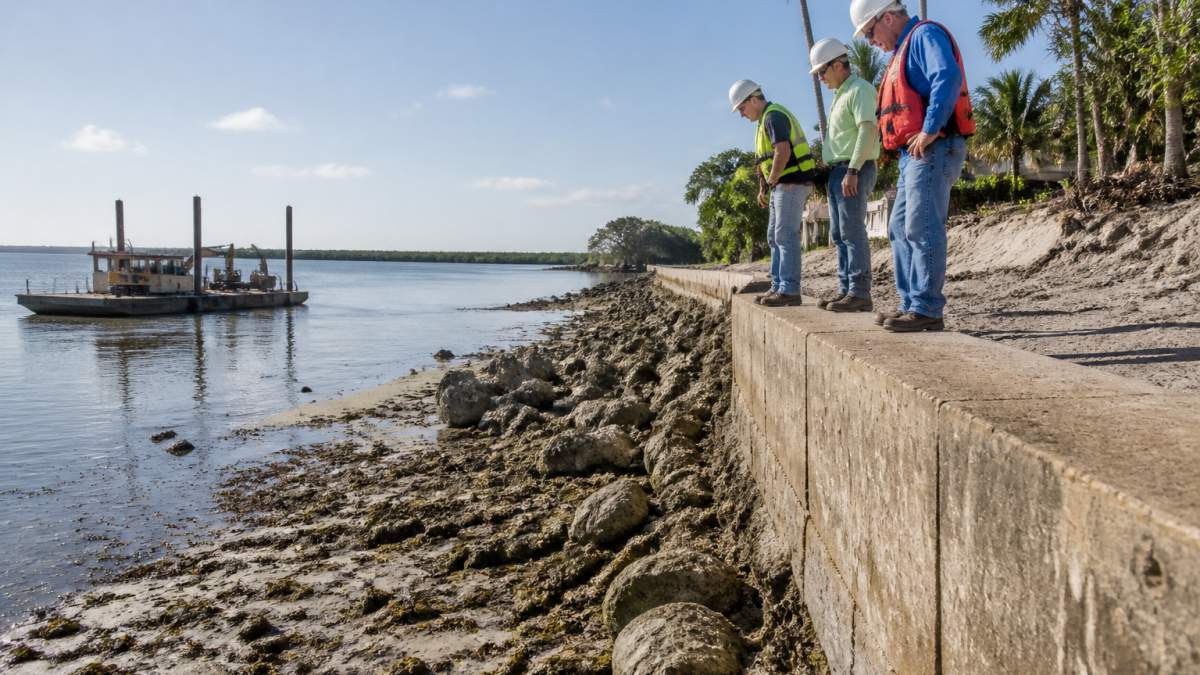
A marine site inspection before construction is a physical survey of the water, bottom, and shoreline where the work will happen. It is the best tool for finding problems while they are still cheap to fix.
What a Real Marine Site Investigation Includes
A credible preconstruction investigation for a dock, seawall, or boat lift typically combines four things:
- Bathymetric survey, a depth map of the bottom around the work area, showing slope, scour holes, and where the bottom has shifted since the last chart. Single-beam is adequate for most residential and light commercial work; multibeam suits complex bottoms or large structures.
- Geotechnical borings or probes, soil samples at the actual pile locations, not one hole in the middle of the site. Advance borings below the planned pile tip, then log blow counts and soil type so the engineer can size the pile.
- Side-scan sonar or magnetometer, used to find buried debris, old pilings, cables, and abandoned mooring hardware before the auger does. This is the single cheapest way to avoid a “we hit something” change order.
Time the visual inspection to low tide when the bottom is most visible. Look for scour, exposed pilings, cracked concrete, and storm debris. Check the upland too, because access and staging decide how crews reach the water.
Geotechnical and Subsurface Risk in Tidal Environments
Tidal sites hide the most risk. Soft mud, old bulkhead remnants, and buried debris sit under the surface. A probe or boring tells you what the drawings cannot.
A common pattern in coastal work: the drawings assume a friction pile in firm sand, the boring finds 12 feet of soft organic silt over that sand, and the pile has to be driven deeper or switched to a different type.
When crews hit something unexpected, work stops, equipment sits idle, and standby costs add up. Finding that risk during inspection keeps it out of the field.
Turning Investigation Data Into Bid Language
The investigation is only worth what you do with it. Before pricing, translate the findings into three written statements:
- Assumed subsurface conditions, soil type, bearing depth, and presence or absence of obstructions.
- Excluded conditions, what happens if the assumptions are wrong, and how that gets priced.
- Unit prices for the likely surprises, extra pile length, obstruction removal, or dredging, priced per unit so the owner can approve a number instead of negotiating one.
That translation step is what separates a marine contractor who avoids change orders from one who simply reacts to them.
Step 3: Defining Marine Construction Contract Scope in Writing
A written marine construction contract scope decides who pays when conditions change. Put it in writing, in detail.
Every contract should include a change-order clause explaining how changes get priced, approved, and documented. Without it, disputes start the moment the first surprise appears.
- State the exact scope, by structure and by quantity
- Name the unit prices for common changes
- Define what counts as a change versus included work
Transparent communication here prevents most arguments later. The owner knows the rules, and the contractor knows the limits.
Step 4: Permits, Navigation, and Agency Coordination
Permits are the quiet cause of many marine delays. Marine work often touches several agencies at once, each with its own timeline. Start early and track every approval in writing.
The Agencies That Actually Touch a Marine Project
A typical dock, seawall, or boat lift project can require review from several layers of government at once:
- U.S. Army Corps of Engineers, issues permits under Section 10 of the Rivers and Harbors Act and Section 404 of the Clean Water Act for work in navigable waters and waters of the United States. Most residential docks fall under a Nationwide Permit, but the general permit still has conditions.
- State environmental or coastal agency, many states run their own wetland, coastal zone, or submerged lands program that runs in parallel with the federal permit.
- State or local submerged lands lease, if the structure sits on state-owned bottom, a lease or easement is usually required in addition to the construction permit.
Each has its own application, review clock, and conditions. Missing one is the most common reason a marine project stalls after the contract is signed.
In-Water Work Windows and Why They Drive Change Orders
Most states restrict in-water construction to a defined work window, often winter or early spring, to protect fish migration, spawning, and protected species. If the window closes before the work is finished, the crew demobilizes and returns next season.
That is not a minor schedule slip but a full remobilization: barge, crane, crew, and equipment leave, then return months later. That round trip is a change order unless the contract already addresses it.
How Permit Conditions Become Priced Changes
Read every permit the way you read the specifications, line by line, looking for anything that adds work, time, or equipment. Common examples:
- A condition requiring turbidity curtains or silt fencing that was not in the bid
- A restriction on the hours pile driving is allowed, which stretches the schedule
- A requirement to restore vegetation or shoreline after construction
When a condition changes the scope, document it in writing, price it as a line item, and get the owner’s approval before the affected work begins, the same change-order process used for field surprises, just earlier.
Coordinating Agencies Without Losing the Schedule
- Identify every required permit before bidding, and list them in the contract
- Confirm which agency controls navigation and shoreline work in that specific waterway
- Build permit review time into the schedule as a real line item, not a buffer
If a permit condition forces a design change, that is a change order waiting to happen. Catch it before mobilization, not after, and coordinate it for the owner rather than leaving it to chance.
Step 5: How the Construction Change Order Process Should Work
The construction change order process is a fixed sequence: identify the change, price it, get written approval, then do the work. Skip a step and it becomes a dispute.
- Identify the changed condition in the field
- Document it with photos and notes
- Price the change using current pricing
- Send a written change order for approval
- Get the owner’s signature before work starts
- Track the change against the budget
Pricing Changes, Line-Item Costs, and Cost Estimate Validation
Price changes with line-item costs, not lump sums, so the owner sees exactly what each part costs. Get multiple quotes for major items and validate every estimate against current market prices.
|
Change Type |
Who Usually Causes It |
Best Prevention |
|---|---|---|
|
Subsurface surprise |
Hidden bottom conditions |
Site inspection and borings |
|
Scope gap |
Vague contract language |
Detailed written scope |
|
Permit condition |
Agency requirements |
Early permit coordination |
|
Material delay |
Long-lead equipment |
Early procurement |
Step 6: Procurement, Long-Lead Equipment, and Schedule Impact
Long-lead equipment is a schedule killer in marine work. Piles, custom lift components, and specialty hardware can take weeks to arrive. Order early or accept the delay.
Every schedule impact has a cost: a delayed delivery pushes crews onto standby, and standby is not free. Track lead times the way you track the budget.
- Order long-lead items as soon as the contract is signed
- Confirm delivery dates in writing
- Build float into the schedule for delays
Step 7: A Marine-Specific Change-Order Prevention Checklist
Use this checklist before every marine project to prevent most change orders.
- Review plans and specifications together
- Complete a low-tide site inspection
- Test subsurface conditions with borings or probes
This is where the right contractor changes the outcome. Crocker Marine‘s True Price Guarantee is built to remove surprise change orders, and our team brings more than a decade of coastal experience to every job.
The best way to avoid a change-order dispute is to work with a team that plans for the water before it starts digging, that planning protects your budget and your schedule.
Marine projects will always carry some uncertainty, but the right process keeps it from becoming a surprise bill.
Frequently Asked Questions
What exactly is a change order in marine construction?
A change order is a written amendment to the original construction contract that alters the project scope, cost, or schedule. On marine projects it typically covers unforeseen field conditions, added pilings, revised seawall elevations, or expanded dock footprints. Without a signed change order, the contractor has no authorization to bill for extra work and the owner has no agreed price. Every change should be documented in writing, priced with line-item costs, and approved before work begins. Verbal agreements lead to disputed change orders and payment friction at invoice time.
How can you prevent change orders on a marine construction project?
Prevention starts before the contract is signed. Complete a marine site inspection before construction, including soil borings and a tidal survey, so the design reflects actual conditions. Define project scope and design details in the plans and specifications, then write a change-order clause that sets pricing rules and written approval steps. Confirm permits and navigation requirements early. During construction, hold short weekly stakeholder communication check-ins so small field conditions get resolved before they become formal scope changes.
What should a marine construction contract include to reduce change orders?
A strong contract names the scope definition, plans and specifications, unit prices for common extras like piling installation or riprap, and a clear change-order process with written approval requirements. It should state who pays for permit revisions, how standby and remobilization are billed, and what happens if a disputed change order stalls work. Include a schedule with weather and tide allowances. Ask for multiple quotes on major line items and confirm current pricing before signing, so the budget reflects real market rates rather than estimates.
What should you do if you disagree with a construction change order?
Do not authorize the work or sign anything until you understand the pricing. Ask for a written breakdown of line-item costs, including labor, materials, and equipment, and compare it to multiple quotes where possible. If the change stems from a design detail already in the plans, point to the contract language. Request a meeting with the contractor and, for large disputes, a third-party cost estimate. Most disagreements resolve through documentation review. If not, the contract’s dispute clause, often mediation before litigation, sets the next step.