Last Updated: October 28, 2026
Quick Summary
The most effective ways to reduce boat wake damage at docks are slowing down early, keeping a safe distance from structures, using properly sized bumpers, securing boats with the right lines, and inspecting hardware regularly. Speed and distance matter most, because wake energy grows with boat speed and spreads out over distance. Matching protection to your dock’s type and exposure also helps.
- Drop to idle or no-wake speed near docks, moored boats and marked zones.
- Slow down well before reaching the dock, since the wake is generated before you arrive.
- Halving your speed cuts wake energy to about a quarter.
- Use fenders or bumpers sized to the boat, and attach lines to strong points like cleats.
- Inspect bolts, pilings, decking and bumpers after storms or heavy boat traffic seasons.
Table of Contents
- Why Boat Wakes Damage Docks and Moored Boats
- How to Prevent Boat Wake Damage by Slowing Down Near Shore
- Keeping a Safe Distance From Docks and Shoreline Structures
- Dock Bumpers for Boat Protection: Choosing Shock-Absorbing Equipment
- How to Tie a Boat Securely to a Dock to Limit Movement
- Choosing Dock Protection by Dock Type and Exposure
- Dock Inspection After Storms and Wakes: What to Check
- Booking a Dock Assessment With Crocker Marine Services
- Frequently Asked Questions
Boat wake damage at docks can affect waterfront structures. Each passing boat sends energy into the water, and that energy keeps moving until it hits a dock, a piling or a moored hull. Cracked cleats, loose decking, worn fenders and boats banging against structures are examples of possible wake-related damage. Some damage may be preventable. Below, we cover seven practical ways to reduce boat wake damage at docks. Maintaining the integrity of your vessel extends beyond structural repairs to the electrical system, where you should also take steps to prevent battery corrosion.
Why Boat Wakes Damage Docks and Moored Boats
A wake is the wave pattern a boat leaves behind as it moves through the water. Wake size depends mainly on the boat’s speed, hull shape and weight.
The problem is what happens after the wave leaves the boat. Waves reach shorelines and docks, then rebound and cross each other. The result is repeated, uneven motion. Floating docks rise and fall, pilings take sideways stress and moored boats slam into bumpers or the dock itself.
Repeated movement can affect dock hardware and structures.
How to Prevent Boat Wake Damage by Slowing Down Near Shore
Slowing down near the shoreline is one way to reduce wake.
- Drop to idle or no-wake speed when you enter a dock area or canal
- Slow down well before you reach moored boats, not at the last moment
- Watch for posted no-wake zones and follow them without exception
Watch out: Many boaters slow down only when they pass the dock itself. By then, the wake has already been generated and is headed straight for the structures you are trying to protect.
Keeping a Safe Distance From Docks and Shoreline Structures
Distance is the second lever after speed, and it works on a simple principle: wave energy spreads out as it travels. A wake generated close to a dock arrives tall and steep; the same wake generated farther out arrives lower and longer, and a longer, lower wave pushes on pilings and hulls with far less peak force. That is why “slow down early and wide” beats “slow down at the dock” every time.
How distance and speed interact
Wake energy scales roughly with the square of boat speed, so halving your speed cuts wake energy to about a quarter. Distance then spreads whatever energy remains over a larger area. The practical takeaway: create separation while you still have room to do it. A boat that stays on plane until it is abeam of a marina has already launched its wake; no amount of steering around the dock afterward will recall it.
Practical distance guidance
Where no posted rule applies, consider these guidelines:
- Idle or no-wake speed within any marked zone and anywhere moored boats are present
- Stay outside the line of moored boats rather than threading between a dock and the channel
- Give open-water docks and seawalls extra room, an exposed dock catches wake from every direction, so a wave you generate at an angle still arrives
- Move to the center of the channel when passing a line of docks, even if it means a longer route
When the channel leaves no room
Narrow canals and tight channels sometimes force you close to structures. In that case, speed is your only remaining control: drop to idle, keep the boat on an even keel, and avoid sudden throttle changes that throw a surge of water at the bank. If you regularly run a narrow canal lined with docks, note that your own wake is part of someone else’s maintenance problem, and that the same courtesy will be paid back to your dock.
The article compares practical distance and speed steps for reducing wake energy at docks.
| Factor | Effect on wake | Practical step |
|---|---|---|
| Speed | Halving speed cuts wake energy to about a quarter | Drop to idle or no-wake speed near docks |
| Distance | Spreads wave energy over a larger area | Stay outside the line of moored boats |
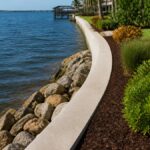
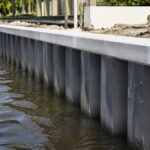
| Dock type | Open-water docks catch wake from more directions | Give exposed docks and seawalls extra room |
| Narrow channel | Limits room to create separation | Slow to idle and keep the boat on an even keel |
Dock Bumpers for Boat Protection: Choosing Shock-Absorbing Equipment
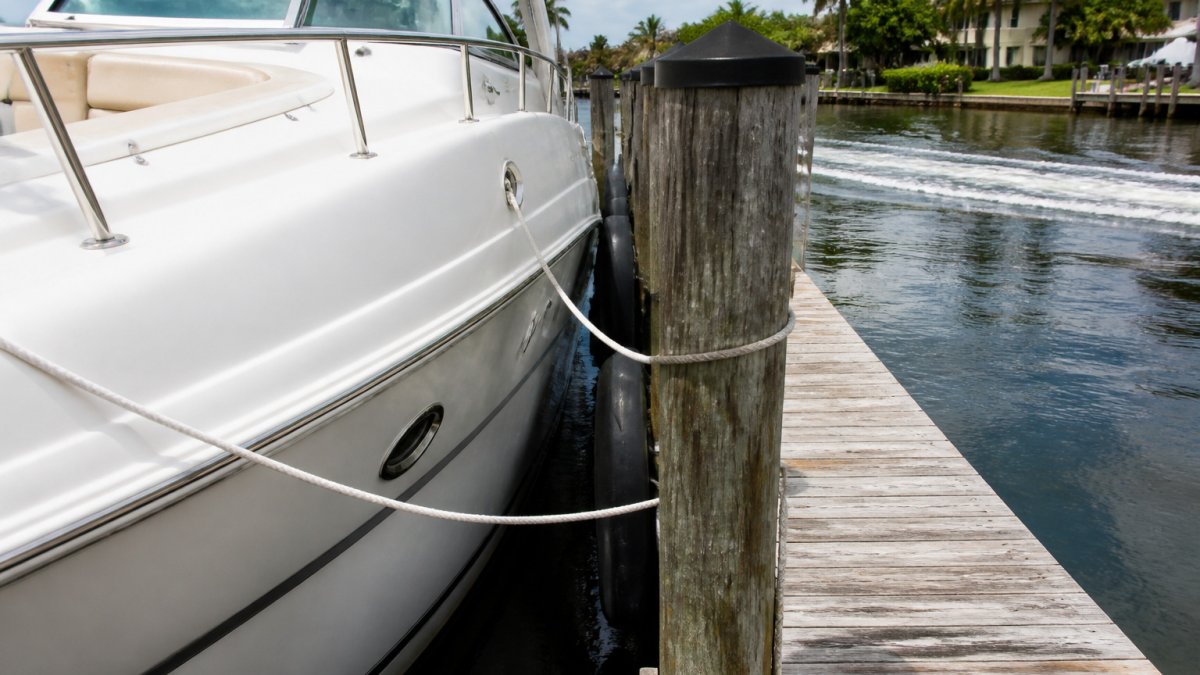
Bumpers, also called fenders or snubbers, can cushion contact between a boat and a dock.
How to Tie a Boat Securely to a Dock to Limit Movement
- Use dock lines rated for your boat’s size and load
- Attach lines to strong points such as cleats or eyebolts, not weak rails
- Leave enough slack for tides and water level changes, but not so much that the boat swings freely
- Add a second line or spring line to control fore and aft movement
- Check knots and hardware before each trip and after storms
Choosing Dock Protection by Dock Type and Exposure
Most wake damage comes down to a mismatch: the right protection for a sheltered canal slip is the wrong protection for an open-bay dock that takes boat wake from three directions. This section gives you a way to match protection to your dock’s construction and how much wake energy actually reaches it.
Start with a quick exposure assessment
- Wake frequency, how many boats pass per hour on a busy weekend, and how close is the traffic lane?
- Fetch and orientation, how much open water does a wake cross before it reaches you, and does your dock face the prevailing wind and boat traffic?
- Structure type, floating or fixed, wood or steel pilings, and how the dock connects to shore.
Floating docks
- Heavy-duty fenders along the berth face, sized to the boat, not the dock
- Guide pile rollers or sleeves that let the dock slide without grinding against the pile
- Flexible gangway connections that tolerate movement without loosening bolts
- Mooring whips or snubbers to keep the boat off the fenders in choppy conditions
Fixed docks
- Piling wraps or dock fenders to cushion boat contact
- Diagonal bracing and through-bolt checks at connection points, since repeated lateral load loosens fasteners
- Cleats and hardware rated for surge loads, not just static boat weight
- Wave attenuators or breakwater panels where open-water exposure is high and the dock cannot be relocated
When to add a wave attenuator
A wave attenuator, a floating or fixed barrier that breaks incoming waves before they reach the berth, is the heaviest step and usually reserved for open-water docks with persistent wake. It is worth considering when bumpers and lines alone cannot keep a boat stable, or when pilings show recurring movement. Attenuators need their own anchoring and inspection, so they are a commitment rather than an add-on.
A simple decision path
- Sheltered canal, light traffic: quality fenders, properly sized lines, annual hardware check
- Moderate exposure, floating dock: heavy fenders, guide pile protection, mooring snubbers
- Moderate exposure, fixed dock: piling wraps, bracing inspection, surge-rated hardware
- Open water, heavy traffic: all of the above plus a wave attenuator or relocation of the berth
Dock Inspection After Storms and Wakes: What to Check
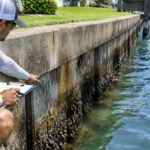
Wake damage may not be immediately apparent.
- Look for loose or missing bolts, cleats and brackets
- Check pilings and bracing for cracks, rot or movement
- Inspect decking and floating dock sections for gaps or cracked joints
- Examine bumpers, lines and attachment points for wear
- Confirm that boat lifts and dock connections still sit level and secure
Consider inspecting after a major storm or a season with heavy boat traffic.
Booking a Dock Assessment With Crocker Marine Services
Crocker Marine Services provides marine inspections and dock repair services. Crocker Marine Services is state-certified and insured. Its True Price Guarantee is designed to eliminate surprise change orders.
To request an inspection or get a quote, visit the Crocker Marine Services website.
Frequently Asked Questions
How can I reduce boat wake damage at my dock?
Start with boat operation: slow down well before you reach the shoreline, dock, or other moored boats, and keep a wide safe distance from shore structures. On the dock side, add shock-absorbing bumpers or fenders, use dock lines with some stretch, and check pilings and bracing after rough water.
What causes boat wake damage to docks?
Wakes are waves generated by a boat’s hull moving through water.
Do dock bumpers help protect a dock from boat wakes?
Yes, bumpers and fenders absorb some of the shock when a boat or dock surges against a piling or the hull. They protect the boat’s finish and reduce the impact load on the structure, but they do not stop the wake itself. Pair them with slower speeds and secure lines for the best results, and replace worn or cracked bumpers before they fail.
When should a dock or seawall be inspected for wake damage?
Inspect after any storm or period of unusually heavy boat traffic, and check at least once a year. Look for loose or missing fasteners, cracked or split pilings, shifting floats, worn dock line chafe points, and any gaps where the dock meets the seawall. Early signs of movement are much cheaper to correct than structural failure, so a prompt inspection after rough water is worth the time.