Last Updated: November 5, 2026
Quick Summary
To plan a private dock for shallow water, start with a site survey that measures depth at the lowest expected water level, every 10 feet out from shore. Then confirm property boundaries and permits, choose between a floating or fixed design based on water-level changes, and size pilings and anchors to match the bottom.
- Measure water depth at low water, not on a calm high-tide day.
- Know your boat’s draft and add a margin to set dock length.
- Record shoreline rise and seasonal high and low water marks.
- Confirm property boundaries and permits before finalizing any design.
- Match anchors and pilings to the bottom type, whether soft mud or firm sand.
Table of Contents
- Survey the Shoreline and Measure Water Depth
- Check Property Boundaries, Permits, and Environmental Rules
- Choose a Floating Dock for Shallow Water or a Fixed Design
- Draw Dock Building Plans for Layout, Width, and Boat Clearance
- Plan Pilings, Anchoring, and Stability
- Book Your Site Evaluation and Dock Plan With Crocker Marine Services
- Frequently Asked Questions
Survey the Shoreline and Measure Water Depth
Planning a private dock for shallow water starts on the shoreline, not on the drawing board. A careful site survey tells you what the water will allow, what the bottom can support, and how the dock will sit at different water levels. Skipping this step is the most common reason a dock ends up unusable or needs expensive changes later.
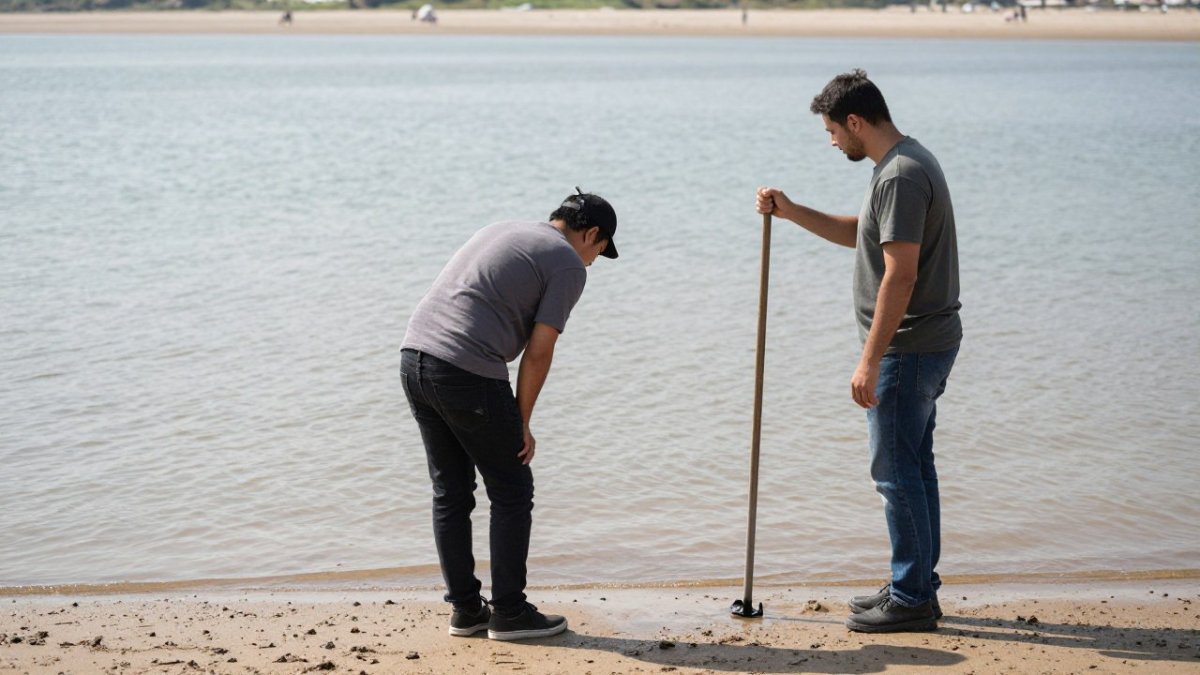
Walk the entire shoreline you plan to use. Note where the bank is firm, where it is soft, and where the water appears to get shallow fastest. Take photos from the water and from the land so you can compare conditions later.
Build a Depth Profile at Low Water
Measure depth during the lowest water level you can reasonably expect, not on a calm high-tide day. If you want a professional check of the site, marine inspections across Southwest Florida can confirm shoreline and water conditions. Water levels shift with seasons, rainfall, and wind, so a single reading can be misleading.
Use a weighted line or a marked pole to measure depth from the bottom to the surface. Take readings at several points along the proposed dock path, not just one spot. A practical pattern is to measure at the shoreline, then every 10 feet out to the end of the proposed dock, and then a few points beyond it. Record the date, time, and tide condition with every reading, and repeat measurements over several visits if you can.
Plot those readings on a simple graph with distance from shore on one axis and depth on the other. That depth profile shows you exactly where the bottom drops off and how far the dock must reach to float your boat. A boat’s draft, the depth it needs to float safely, decides how far out the dock must go. Know the draft of the boats you plan to use before you choose a length, and add a margin for loaded fuel, gear, and passengers.
Measure Shoreline Slope and Seasonal Range
Shoreline slope affects gangway length, step count, and how the dock connects to land. Measure the vertical rise from the waterline to the bank at the proposed access point, and note how that rise changes between seasons. A steep bank may need steps or a longer gangway; a flat bank may flood during high water.
Ask local dock builders or your permitting office for the seasonal high and low water marks in your area. Compare those marks to your depth profile so you know the full range the dock must handle. If the range is large, a floating dock or a hinged gangway may be the only practical way to keep access safe year-round.
Check Bottom Conditions and Wave Action
Soft mud, sand, and seagrass each affect how you anchor and support a dock. Probe the bottom with a pole to see how firm it is. Look for seagrass beds, which may be protected and can limit where you build.
Watch the shoreline during windy days, if possible. Strong wind and boat wakes create wave action that can stress pilings and floating sections. Note which direction the waves come from so you can position the dock to reduce exposure. A common pattern is to angle the dock so the longest side faces the prevailing wind, which reduces the load on anchors and connections. Because wind and wakes also affect how a lift sits beside the dock, choosing boat lifts should account for the shoreline’s exposure as well as the available water depth.
Before choosing a dock design, compare the key site measurements you should record during the survey.
| Measurement | How to Take It | Why It Matters |
|---|---|---|
| Water depth | Measure at low water, every 10 feet out | Sets how far the dock must reach |
| Boat draft | Know the draft and add a margin | Decides the dock’s length |
| Shoreline rise | Measure from waterline to bank | Affects gangway length and steps |
| Seasonal range | Ask for high and low water marks | Shows the full range the dock must handle |
| Bottom firmness | Probe with a pole | Affects anchoring and piling support |
Check Property Boundaries, Permits, and Environmental Rules
Before you design anything, confirm where your property ends and where the water controlled by public or government agencies begins. Many shallow-water docks run into trouble because they extend past a boundary line without approval.
Start with a current survey of your property. A licensed surveyor can mark the shoreline and any setback lines that limit where structures may go.
Next, check which agencies oversee your site. Permitting for docks often involves local government and state agencies that review impacts to water and wetlands (the EPA). Your local building department can tell you which agencies apply to your property. Ask them early, because permit reviews take time.
Environmental rules matter too. Seagrass, manatee protection zones, and nearby wildlife habitat can all restrict construction methods and timing. Ask your contractor and the permitting office what restrictions apply to your location.
Homeowners’ associations may add their own rules on dock size, color, and design. Get those approvals in writing before you spend money on plans.
Choose a Floating Dock for Shallow Water or a Fixed Design
Shallow water changes which dock type works best. A floating dock rises and falls with the water, which helps when depth varies. A fixed dock sits on pilings and stays at the same height, which can be a better fit for stable, predictable water.
Use these questions to narrow your choice:
- How much does the water level change? Large swings favor floating docks.
- How deep is the water at low tide? Very shallow water may leave a floating dock resting on the bottom.
- What will you use the dock for? Heavy boat lifts often pair better with fixed pilings.
- How much maintenance can you handle? Fixed docks need periodic piling checks. Floating docks need attention to flotation and connections.
A floating dock is often the right choice when water depth changes a lot and the bottom is firm enough to hold anchors. A fixed dock is often better when the water is consistently shallow and the bottom can take piling installation.
Work with a contractor who has built in your local water conditions.
Draw Dock Building Plans for Layout, Width, and Boat Clearance
Once you know your site and dock type, draw a plan. Tidal ranges change dock height and boat clearance, so review how tides affect dock and boat lift design before you fix the layout. A simple scaled drawing helps you test how the dock will fit the shoreline and the boat you plan to use.
Include these details in your plan:
- The dock’s length, measured from the shoreline to the end.
- Width, usually wide enough for walking, loading gear, and safe boarding.
- Boat slip position and the clearance on both sides of the boat.
- Access points, steps, and a gangway if the dock changes height.
- Distances from property lines and neighboring docks.
Leave enough clearance so the boat can swing without hitting the dock or pilings. Check this at low tide, since that is when the boat sits closest to the bottom and the dock may be at its lowest.
Good plans also make it easier to get accurate quotes. Share the drawing with contractors so they can price the same design.
Watch out: a dock that extends too far into shallow water can leave the boat stuck at low tide. Measure twice at the lowest water level before you fix the length.
Plan Pilings, Anchoring, and Stability
A dock is only as stable as its supports. For fixed docks, pilings carry the load and resist wave and wind forces. For floating docks, anchors and cables hold the structure in place. Getting this part right is what separates a dock that lasts from one that shifts, racks, or fails in the first storm.
Size Pilings for Load and Bottom Type
Piling depth and spacing depend on the bottom material and the loads the dock must carry. In soft mud, pilings need to be driven deeper to reach firm strata; in sand or firm clay, shorter embedment may be enough. Spacing is set by the deck load and by wave and wind forces, not by convenience. A structural engineer or experienced dock builder can run the numbers.
Heavy boats, lifts, and gear should sit over supports rather than at the outer edge. Keep the center of gravity low and centered on the piling grid.
Design the Anchoring System for Your Bottom
Anchor type should match the bottom. Soft mud and firm sand require different anchors: a mushroom or helix anchor may hold well in firm sand, while a deadweight or screw anchor may be needed in soft mud. Cable and chain lengths must allow for changes in water level while keeping the dock in position, too tight and the dock lifts or racks at high water; too loose and it drifts and chafes.
Anchor placement matters as much as anchor type. Protective solar piling cap lights can also complement the pilings once the structure is in place. Set anchors so the pull is roughly horizontal and spread wide enough to resist rotation. A common pattern is four anchors at the corners of a rectangular float, with the cables angled outward. Bracing helps resist side-to-side movement from waves and boat traffic.
Ask your contractor for an engineering review of the anchoring plan, especially for storm-prone areas. If the dock will be removed seasonally, plan anchor and cable connections that can be released and re-tensioned without diving.
Book Your Site Evaluation and Dock Plan With Crocker Marine Services
A well-planned private dock in shallow water takes careful measurement, the right permits, and a support system built for your site. Crocker Marine Services can help you move from idea to plan. Crocker Marine Services offers waterfront construction and marine inspection services.
Contact Crocker Marine Services to schedule a site evaluation and talk through your dock plan.
Frequently Asked Questions
What type of dock is best for shallow water?
In shallow water, a floating dock or a fixed dock on pilings can both work, but the right choice depends on the water depth at low tide and how much the level changes across seasons. Floating docks rise and fall with the water, which helps when depth varies. Fixed docks suit sites with stable, predictable levels and firm bottoms. Have the site surveyed at its lowest seasonal water level before you decide, because a dock that clears the water at high tide may ground a boat at low tide.
How deep does water need to be to dock a boat?
The required depth depends on your boat’s draft, which is the distance from the waterline to the lowest point of the hull or motor, plus a safety margin for waves and tides. Measure the depth at the lowest expected water level, not the depth on a calm day. Plan the dock’s end so the boat can reach it without grounding, and check whether dredging would be needed.
What permits may be needed to build a private dock?
Most private dock projects require review by local government and may also involve state and federal agencies, depending on the water body and the work involved. Expect to confirm property boundaries, setback rules, and environmental protections for sea grass and wetlands. Homeowners in HOA communities should also check association approval rules. Ask your contractor to confirm which approvals apply to your site before construction begins.