Table of Contents
- Understanding Marine Construction Services in Your Area
- Seawall Repair: When to Fix vs. Replace
- Dock Construction: Planning Your Waterfront Project
- Marine Construction Permits and Environmental Rules
- Boat Lift Installation: What to Expect
- Choosing the Right Contractor and Avoiding Hidden Costs
- Inspection, Maintenance, and Long-Term Protection
- Frequently Asked Questions
Last Updated: October 11, 2026
Understanding Marine Construction Services in Your Area
Marine construction services sarasota in Florida address the unique challenges waterfront property owners face in protecting and enhancing their coastal investments. Whether you own a residential dock, manage a commercial waterfront property, or oversee shared marina infrastructure, understanding what marine construction involves, and how to plan for it, can save thousands in unexpected costs and prevent costly mistakes down the road.
At Crocker Marine, we’ve worked with property owners across Southwest Florida to design, build, and repair seawalls, docks, boat lifts, and other waterfront structures. The projects that succeed share one thing in common: owners who took time upfront to understand their options, their local regulations, and what to expect from the process. Integrating durable hardscaping into your waterfront design often requires coordinating with skilled Southwest Florida pavers to ensure your deck and walkway surfaces withstand the coastal environment.
This guide walks you through the essentials of marine construction services sarasota in Florida, from recognizing when repair is possible versus replacement necessary, to navigating permits, selecting a contractor, and maintaining your structures for decades to come.
Seawall Repair: When to Fix vs. Replace
Seawall problems rarely announce themselves clearly. A small crack might be cosmetic, or it might signal structural failure. The question every waterfront owner eventually faces is whether to repair the existing seawall or replace it entirely.
A seawall that shows minor cracks, small areas of spalling (surface erosion), or minor settlement can often be repaired. Repairs typically address specific damage without disturbing the entire structure. However, if the wall leans noticeably, shows widespread cracking, or has shifted more than a few inches, replacement is usually the only reliable option.
The cost difference matters. Repairs are less expensive upfront, but a failing seawall repaired today might need replacement in five years. Replacement costs more initially but provides a long-term solution. When evaluating your seawall, look for these warning signs: water seeping through the wall, vegetation growing from cracks, visible lean or bulging, or sections that have settled relative to adjacent areas.
|
Warning Sign |
What It Means |
Typical Action |
|---|---|---|
|
Minor surface cracks |
Cosmetic wear |
Monitor; repair if spreading |
|
Water seeping through |
Pressure building behind wall |
Evaluate repair vs. replacement |
|
Visible lean or bulge |
Structural failure starting |
Replace |
|
Widespread spalling |
Saltwater erosion accelerating |
Plan replacement within 2-3 years |
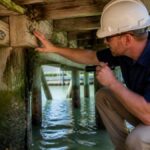
Professional marine inspection can clarify the situation. A licensed inspector will assess the wall’s integrity, identify the root cause of any damage, and recommend repair or replacement based on what will actually protect your property long-term.
Dock Construction: Planning Your Waterfront Project
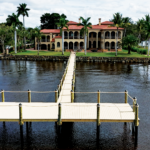
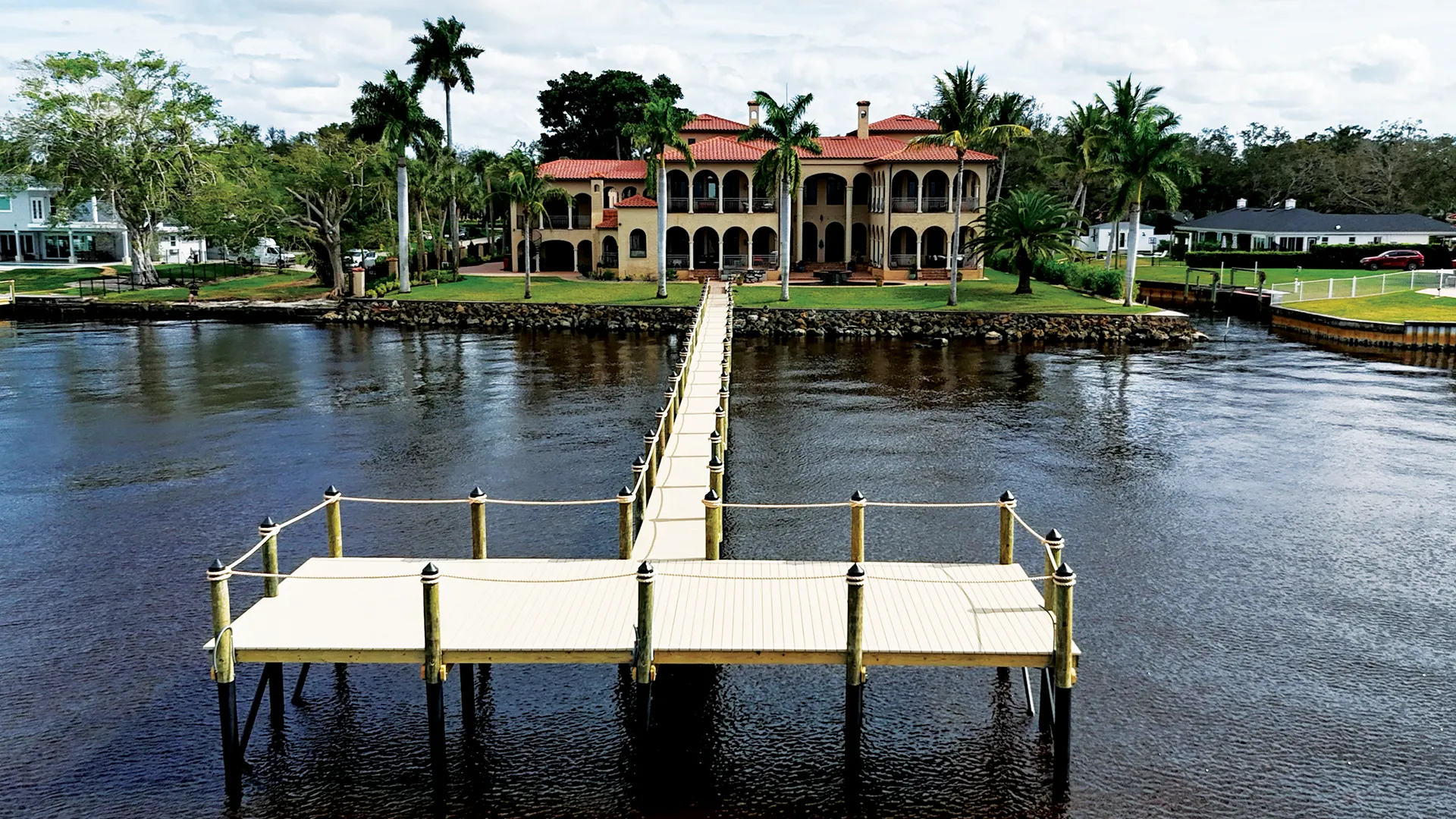
Building a new dock or replacing an aging one requires planning across multiple dimensions: design, permits, materials, and timeline. Most homeowners underestimate how long the permitting process takes and how specific local rules are about dock construction.
Start by understanding what you actually need. A small residential dock for tying up one boat has different requirements than a shared community dock or a commercial fishing facility. Your dock’s size, materials, pilings, and utilities all depend on how you’ll use it, water depth, and local environmental rules.
The design phase determines whether your project moves forward smoothly or gets delayed. Local authorities in Sarasota County and surrounding areas have specific standards for dock setbacks, pile spacing, maximum coverage, and environmental protection. A contractor experienced in marine construction services sarasota in Florida will know these rules and design accordingly.
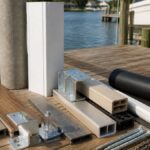
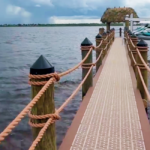
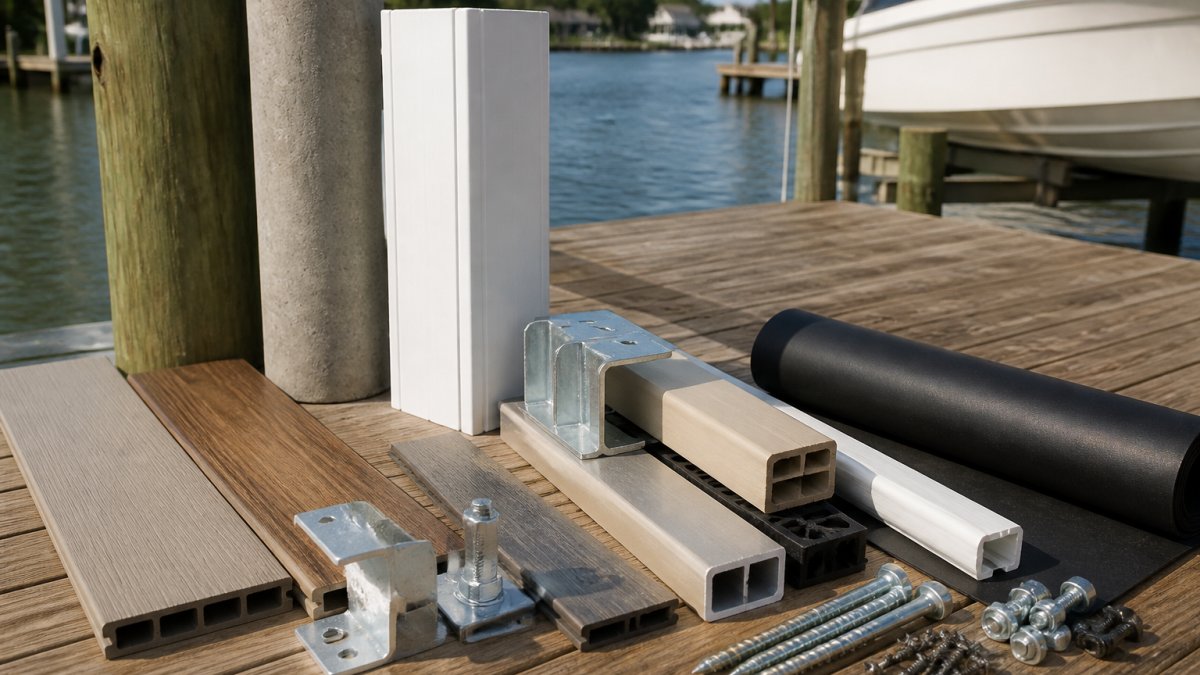
Materials matter for durability. Pressure-treated wood, composite decking, and aluminum are common choices, each with different lifespans and maintenance needs. Pressure-treated wood is less expensive upfront but requires regular maintenance in saltwater environments. Composite materials cost more but resist rot and require less upkeep. Your contractor should help you weigh cost against long-term performance.
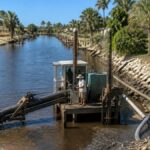
Permitting typically takes time, depending on the project scope and how quickly you respond to agency requests. Dredging, if required, adds complexity and cost. Environmental reviews ensure your dock doesn’t harm seagrass beds or other protected habitats. Starting the permitting process early prevents delays when you want to use your dock.
Marine Construction Permits and Environmental Rules
Waterfront construction in Florida operates under overlapping federal, state, and local regulations. The permitting process protects water quality, marine habitat, and navigation safety. Understanding the key rules prevents costly rejections and delays.
The U.S. Army Corps of Engineers regulates activities in navigable waters under the Clean Water Act. If your project affects wetlands or involves dredging, you’ll need a Corps permit. The Florida Department of Environmental Protection (FDEP) reviews projects for impacts on seagrass, mangroves, and other protected ecosystems. Local authorities in Sarasota County and municipalities enforce additional rules on setbacks, lot coverage, and design standards.
Most residential dock and seawall projects require permits from FDEP and local government. Commercial projects often need Corps permits as well. The permitting timeline varies depending on the project’s complexity and scope.
Environmental rules exist for good reason. Seagrass beds and mangrove shorelines support fish nurseries and filter water. Dredging and construction can damage these habitats if not done carefully. Permits include conditions designed to minimize harm: timing windows to avoid nesting season, silt curtains to prevent sediment spread, and pile placement that avoids seagrass.
Working with a contractor experienced in marine construction services sarasota in Florida means someone who understands these regulations and has successfully navigated them before. Crocker Marine handles permitting as part of our service, managing the paperwork and agency coordination so you don’t have to.
Boat Lift Installation: What to Expect
Boat lift installation is one of the most popular dock enhancements for residential waterfront properties. A quality lift protects your boat from constant water exposure, extends its lifespan, and makes launching easier.
Boat lift selection depends on your boat’s weight, your water depth, and how often you use the boat. Residential lifts typically handle boats from 5,000 to 15,000 pounds. If your boat is heavier or your water depth is unusual (very shallow or very deep), you’ll need a specialty lift, which costs more.
Water depth is the critical factor. Most lifts work in 4 to 8 feet of water. Shallower water requires a shallow-water lift. Deeper water might require a different design. Your contractor measures your dock location to confirm the lift you’re considering will work.
Installation takes time for a straightforward residential lift on an existing dock. The lift is mounted to the dock pilings or to a new set of pilings installed specifically for the lift. Electrical connection (for powered lifts) adds complexity and cost but eliminates manual operation. Battery-powered and manual lifts are less expensive but require more physical effort.
After installation, boat lift maintenance is straightforward: regular inspection of cables, pulleys, and fasteners; occasional lubrication; and seasonal checks before heavy use. A well-maintained lift lasts for a long time.
Choosing the Right Contractor and Avoiding Hidden Costs
The contractor you choose determines whether your marine construction project runs smoothly or becomes a source of stress and unexpected expenses. The wrong contractor leaves you with cost overruns, poor workmanship, and unfinished projects.
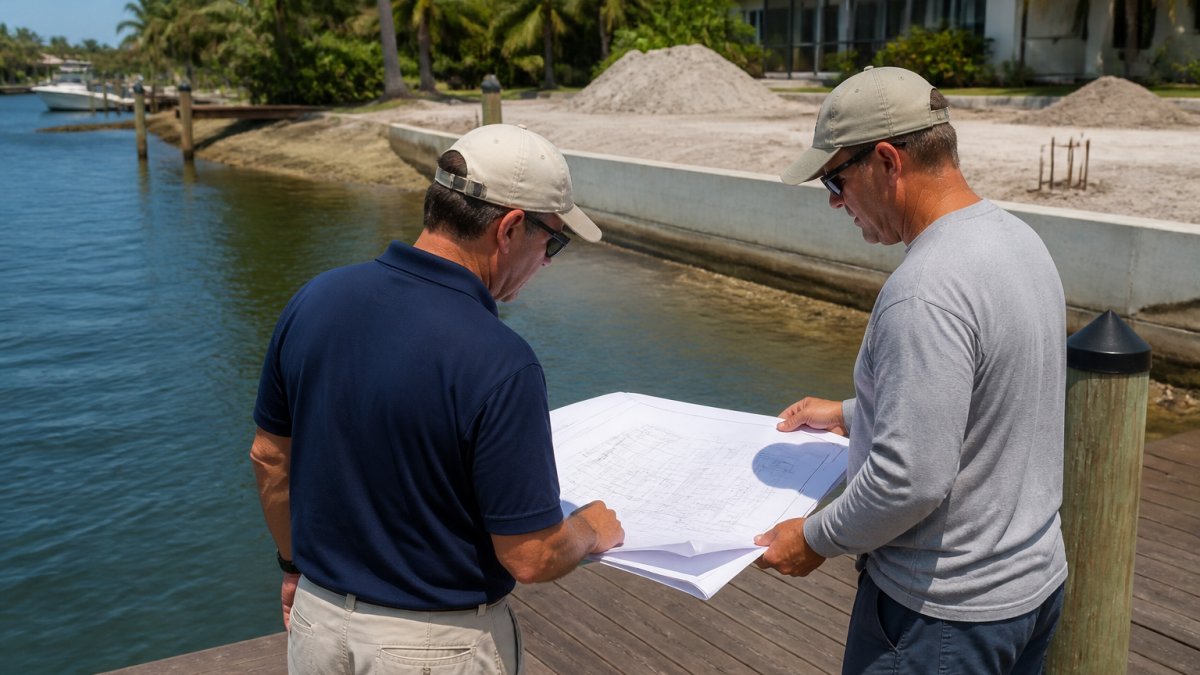
Start by verifying licensing and insurance. Florida requires marine contractors to be licensed under the appropriate category. Ask for proof of current license and insurance covering general liability and workers’ compensation.
Get detailed written estimates from at least two contractors. A vague estimate (“seawall repair: $8,000 to $15,000″) is a red flag. A detailed estimate breaks down materials, labor, equipment, and timeline. It specifies what’s included and what costs extra.
Ask about the contractor’s experience with projects similar to yours. A contractor who has built seawalls in your area knows the soil conditions, water movement, and local permitting quirks.
Check references and online reviews, but verify them. Ask for contact information for three recent clients and actually call them. Ask whether the project stayed on budget and schedule, whether the contractor communicated clearly, and whether they’d hire the same contractor again.
Hidden costs typically emerge from three sources: site conditions worse than expected (unstable soil, buried debris), permit delays or additional requirements, and scope creep (adding work as the project proceeds).
Inspection, Maintenance, and Long-Term Protection
A seawall, dock, or boat lift built right can last for a long time. But nothing lasts without attention. Regular inspection and maintenance catch small problems before they become expensive repairs.
For seawalls, annual inspection is standard practice. Walk the full length of your seawall looking for new cracks, areas where water seeps through, vegetation growing from cracks, or sections that have shifted.
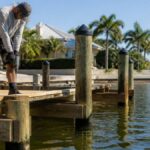
Docks require seasonal maintenance: checking fasteners, inspecting pilings for rot or damage, ensuring railings are secure, and clearing debris. After storms, inspect for damage and address it promptly. Salt water accelerates corrosion, so hardware and connections need regular attention.
Boat lifts need inspection of cables, pulleys, and structural connections before each boating season. Lubricate moving parts and test the lift under load to confirm it operates smoothly. Most maintenance is simple and takes an hour or two annually.
Marine inspections, professional assessments of your seawall, dock, or other structures, are valuable before selling your property, after major storms, or every 5 to 10 years as preventive maintenance.
|
Maintenance Task |
Frequency |
Why It Matters |
|---|---|---|
|
Visual inspection of seawall |
Annual |
Catch cracks and seepage early |
|
Dock fastener and hardware check |
Seasonal |
Prevent corrosion and failure |
|
Boat lift cable and pulley inspection |
Before season |
Ensure safe operation |
|
Professional marine inspection |
Every 5-10 years |
Identify hidden structural issues |
|
Debris clearing from dock and pilings |
Monthly during use |
Prevent water flow obstruction |
Storm season brings heightened risk. Before hurricane season, inspect your structures, trim trees near your dock, and secure loose items. After storms, inspect for damage and address it immediately.
Waterfront property ownership in Southwest Florida brings exceptional lifestyle benefits, and real maintenance responsibilities.
Crocker Marine brings over a decade of Southwest Florida marine construction experience to every project.
Get a quote from Crocker Marine and discover how professional marine construction services sarasota in Florida can enhance your waterfront property.
Frequently Asked Questions
What services does a marine construction contractor provide?
Marine construction contractors offer a full range of waterfront services, including seawall installation and repair, dock construction and repair, boat lift installation, shoreline stabilization, pile driving, and marine inspections. Many also provide dredging, waterway improvements, dock accessories, and storm-damage repairs. Licensed contractors assess your property, design solutions for coastal conditions, handle permitting, and manage construction from start to finish. Services range from small repairs to complete waterfront renovations for residential, commercial, and HOA properties.
How do I know if my seawall needs repair or replacement?
Warning signs of seawall damage include visible cracks, bulging, leaning, settling, loss of material, or water seeping behind the wall. Minor surface damage and small cracks can often be repaired cost-effectively. However, if the structure is severely compromised, shifting, or failing in multiple sections, replacement may be more durable and cost-effective long-term. A professional marine inspection can determine whether your seawall can be repaired or needs replacement based on the extent of damage and remaining structural integrity.
Do marine construction projects require permits?
Yes. Marine construction projects in coastal areas require permits from local environmental and building authorities. Permit requirements vary by project type and location but typically include environmental permits (for erosion control and wetland protection), building permits, and coastal construction permits. The permitting process ensures compliance with environmental regulations and coastal protection laws. Experienced contractors handle the permit application and inspection process, so you don’t have to navigate complex regulations alone. Budget extra time for the permitting phase before construction begins.
What factors affect the cost of marine construction projects?
Project costs depend on scope (repair vs. new construction), site conditions (water depth, soil type, accessibility), materials chosen, project size and complexity, permit requirements, and local labor rates. Seawalls, docks, and boat lifts have different cost drivers. Site assessment often reveals unexpected conditions like poor soil or underwater obstacles that affect pricing. Reputable contractors provide transparent estimates that break down labor, materials, and contingencies. Request a detailed estimate that explains cost drivers so you understand what you’re paying for and can avoid surprise change orders.