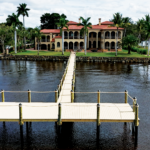
You stand on your dock watching the sunset over the Gulf, and you notice something troubling. The wood shows signs of rot, metal fasteners have begun to rust, and the boards feel softer than they should. Your dock is only five years old, but the saltwater environment has already taken its toll. This scenario plays out across Southwest Florida waterfront properties every year, and it all comes down to one critical decision: choosing the right materials from the start.
Crocker Marine Services has built hundreds of docks throughout Southwest Florida, and we’ve seen firsthand how material selection determines whether your dock lasts five years or fifty. With our license (CBC1266139) and decades of combined experience in Gulf Coast marine construction, we understand what works in these demanding conditions. You can find us on Google where our customers share their experiences with the quality materials and craftsmanship we provide.
Saltwater dock construction requires materials specifically engineered to withstand corrosion, marine organisms, constant moisture, and the intense Florida sun. The wrong choice costs you thousands in premature repairs or complete replacement. The right choice gives you decades of worry-free waterfront access.
Why Saltwater Demands Different Dock Materials Than Freshwater
Saltwater creates a uniquely hostile environment for construction materials. The salt accelerates corrosion of metals at rates three to five times faster than freshwater. What holds up perfectly in a lake or river fails rapidly when exposed to Gulf Coast conditions.
Marine borers present another threat that freshwater docks never face. Shipworms and gribbles are organisms that literally eat through wood, creating tunnels that compromise structural integrity. These creatures thrive in warm saltwater, making Southwest Florida docks particularly vulnerable. Standard pressure-treated lumber rated for ground contact offers no protection against these marine pests.
Constant water exposure combined with Florida’s humidity means your dock materials never truly dry out. This persistent moisture creates ideal conditions for rot, mold, and material degradation. Add in the intense UV radiation from our year-round sunshine, and you have a perfect storm of destructive forces working against your dock 24 hours a day.
Southwest Florida faces additional challenges. Hurricane season brings storm surge and debris impact. Summer temperatures regularly exceed 90 degrees, causing thermal expansion and contraction. Our water contains higher concentrations of minerals and organic matter that accelerate breakdown of inferior materials.
The materials you choose must resist all these factors simultaneously. A material that handles corrosion but fails against marine borers will not last. One that resists moisture but degrades under UV exposure will disappoint. You need materials proven to handle the complete spectrum of Gulf Coast saltwater conditions.
The Best Saltwater Dock Materials for Southwest Florida
Marine-Grade Composite Decking
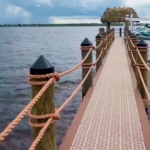
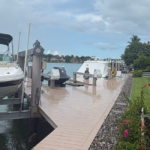
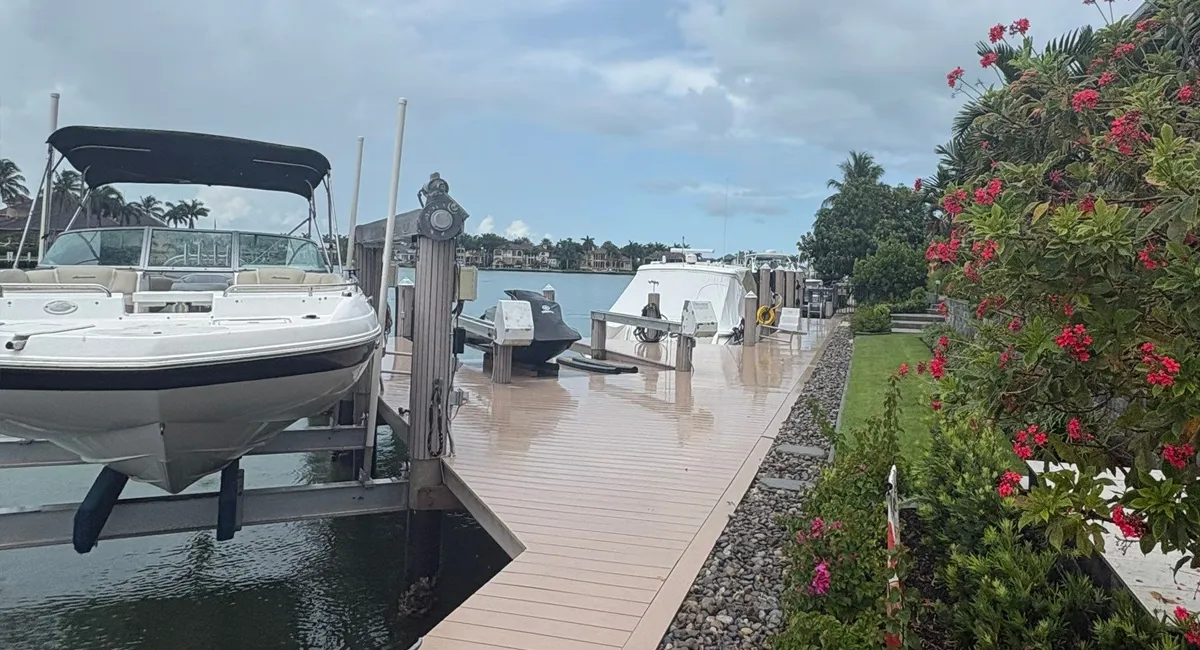
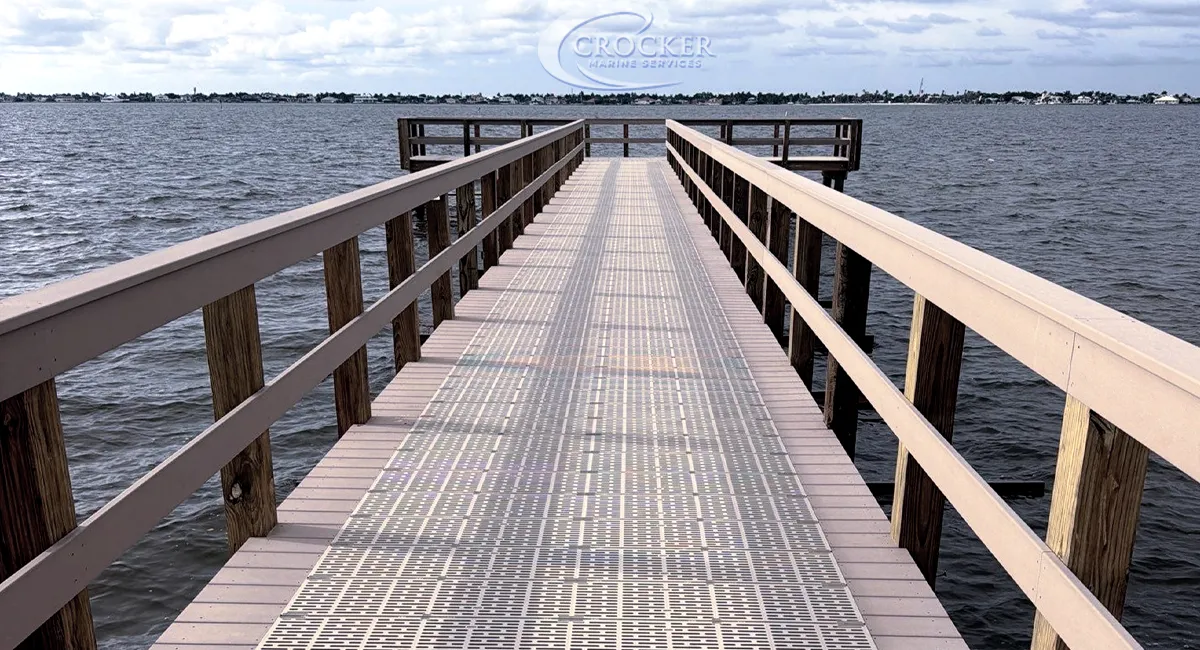
Composite decking has revolutionized saltwater dock construction over the past two decades. These engineered materials combine wood fibers with plastic polymers to create boards that resist moisture, rot, and marine borers while maintaining the appearance of natural wood.
Quality marine-grade composites contain UV inhibitors that prevent fading and degradation under Florida’s intense sun. The plastic content creates a barrier that marine borers cannot penetrate, eliminating one of the primary threats to dock longevity. Unlike wood, composites will not splinter, warp, or crack as they age.
Performance in saltwater environments shows composites maintaining structural integrity for 25 to 30 years with minimal maintenance. The surface resists mold and mildew growth, staying cleaner with less effort. Colors remain stable rather than graying like natural wood.
Maintenance requirements stay minimal. You wash the surface periodically to remove salt buildup and organic debris. No staining, sealing, or painting is required. The material does not absorb water, preventing the rot that plagues wood docks.
Cost considerations place marine-grade composites in the mid to upper price range. Initial investment runs higher than pressure-treated wood but lower than premium hardwoods or aluminum. The total cost of ownership favors composites when you factor in the eliminated maintenance expenses and extended lifespan.
Temperature performance deserves consideration. Composite decking can become hot underfoot in direct summer sun. Lighter colors help mitigate this issue, and many homeowners find the tradeoff acceptable given the material’s other advantages.
Marine-Grade Aluminum
Aluminum brings unmatched corrosion resistance to saltwater dock construction. Marine-grade aluminum alloys are specifically formulated to resist the electrochemical reactions that cause rust and degradation in saltwater environments.
The material’s strength-to-weight ratio allows for lighter dock structures that still meet or exceed load requirements. This characteristic proves particularly valuable in areas with soft bottom conditions where minimizing weight reduces settlement and structural stress.
Aluminum docks handle extreme weather events better than many alternatives. The material flexes rather than breaking under impact, returning to its original shape. Hurricane debris that would shatter wood or crack concrete often leaves aluminum dented but structurally sound.
Maintenance needs remain extremely low. You rinse the structure periodically to remove salt accumulation, but no painting, staining, or sealing is necessary. The material does not rot, splinter, or attract marine borers. Surface oxidation that occurs actually protects the underlying metal rather than weakening it.
Longevity expectations for quality marine-grade aluminum exceed 40 years in Southwest Florida saltwater conditions. The material maintains its structural properties throughout this lifespan, unlike wood which weakens progressively.
Price positions aluminum in the premium category. Initial costs run higher than wood or composite alternatives. However, the combination of minimal maintenance, exceptional longevity, and superior storm resistance makes aluminum cost-effective over the structure’s lifetime.
Heat absorption presents the primary drawback. Aluminum surfaces become extremely hot in direct sunlight. Most aluminum dock installations incorporate composite or other decking materials for the walking surface, using aluminum for the structural framework where its properties provide maximum benefit.
Stainless Steel Hardware and Fasteners
The fasteners and hardware connecting your dock components often fail before the materials they join. Standard galvanized hardware corrodes rapidly in saltwater, creating weak points that compromise the entire structure.
Marine-grade stainless steel solves this problem. Grade 316 stainless steel contains molybdenum, which provides superior resistance to saltwater corrosion. This grade outperforms the more common 304 stainless steel in marine environments.
Critical applications for stainless steel hardware include:
- Bolts and lag screws connecting structural members
- Joist hangers and beam connectors
- Dock cleat mounting hardware
- Railing attachment points
- Electrical fixture mounting
The cost difference between standard galvanized hardware and marine-grade stainless steel seems significant when purchasing. A box of stainless steel lag screws might cost three times more than galvanized equivalents. However, this represents a tiny fraction of your total dock investment.
The long-term value becomes clear when you consider replacement costs. Corroded hardware requires disassembly of dock sections, removal of failed fasteners, potential repair of damaged materials, and reinstallation. This process costs far more than the initial price difference for quality hardware.
Stainless steel hardware maintains its holding power throughout the dock’s lifespan. Galvanized fasteners lose strength as corrosion progresses, creating safety hazards. The peace of mind that comes from knowing your dock’s connections will not fail justifies the modest additional investment.
Treated Pilings and Support Structures
The pilings supporting your dock face the harshest conditions of any component. Submerged portions battle constant saltwater exposure and marine borer attack. Above-water sections endure UV radiation and weather exposure. The transition zone where pilings pass through the water surface experiences the most aggressive corrosion.
Marine-grade pressure treatment provides essential protection. CCA (Chromated Copper Arsenate) treatment has protected marine pilings for decades. The treatment penetrates deep into the wood, creating a toxic environment for marine borers while resisting rot and decay.
Alternative treatments have emerged in response to environmental concerns about CCA. Copper azole and other copper-based treatments offer similar protection with reduced environmental impact. These newer treatments perform comparably to CCA in saltwater applications.
Treatment retention levels matter significantly. Marine applications require higher retention levels than ground contact or above-ground applications. Verify that pilings carry the appropriate marine-grade rating rather than standard pressure treatment.
Species selection influences performance. Southern yellow pine accepts pressure treatment readily and provides good strength characteristics. Some tropical hardwoods offer natural resistance to marine borers but come at premium prices.
Expected lifespan for properly treated marine pilings in Southwest Florida ranges from 20 to 30 years. Factors affecting longevity include treatment quality, species selection, water conditions, and marine borer populations in your specific location.
Concrete pilings present an alternative to treated wood. These eliminate concerns about marine borers and rot while providing excellent longevity. The higher initial cost and installation complexity make concrete pilings more common in commercial applications, though some residential installations use them for permanent structures.
Material Performance Comparison: What Lasts Longest in Gulf Coast Conditions
Understanding how different materials perform in Southwest Florida’s saltwater environment helps you make informed decisions:
Longevity Rankings:
- Marine-grade aluminum frameworks: 40+ years
- Concrete pilings: 35-50 years
- Marine-grade composite decking: 25-30 years
- Properly treated marine pilings: 20-30 years
- Stainless steel hardware: Life of structure
- Standard pressure-treated wood: 10-15 years
- Galvanized hardware: 5-10 years
Maintenance Requirements:
Low maintenance materials:
- Marine-grade aluminum
- Composite decking
- Stainless steel hardware
- Concrete pilings
Moderate maintenance materials:
- Treated marine pilings (periodic inspection)
High maintenance materials:
- Natural wood decking (annual treatment)
- Galvanized hardware (regular inspection and replacement)
Storm Resistance:
Hurricane and storm surge performance varies significantly by material. Aluminum structures flex and absorb impact energy. Composite decking resists debris damage better than wood. Properly engineered connections using stainless steel hardware maintain integrity under extreme loads.
The combination of materials matters as much as individual component selection. A dock with premium composite decking attached with galvanized hardware will fail prematurely when the fasteners corrode. A structure with treated wood pilings supporting an aluminum frame optimizes cost and performance.
Gulf Coast conditions place particular stress on the waterline transition zone. Materials and connections at this level face the most aggressive attack. Extra attention to material selection and protective measures at the waterline pays significant dividends in longevity.
Cost vs. Longevity: Making the Smart Investment
Initial material costs tell only part of the story. Smart dock investment considers total cost of ownership over the structure’s expected lifespan.
Budget Analysis Example:
A 400-square-foot dock using economy materials might cost $17,200 initially ($43 per square foot). With a 10-year lifespan before major repairs or replacement, your annual cost equals $1,720 plus maintenance expenses.
The same dock built with premium materials might cost $28,000 initially ($70 per square foot). With a 30-year lifespan and minimal maintenance, your annual cost drops to $933 plus minimal upkeep expenses.
The premium materials dock costs $10,800 more upfront but saves approximately $23,610 over 30 years when you account for the economy dock requiring replacement twice plus cumulative maintenance costs.
When to Prioritize Durability:
Situations where premium materials make the most sense:
- Permanent waterfront properties you plan to own long-term
- Locations with aggressive marine borer populations
- High-traffic docks supporting valuable boats
- Areas prone to storm damage
- Properties where dock access is essential
- Situations where dock replacement would be extremely disruptive
When Budget Options Work:
Circumstances where economy materials might be acceptable:
- Temporary installations with short planned lifespan
- Properties you plan to sell within five years
- Protected locations with minimal wave action
- Areas with lower marine borer activity
- Situations where you can easily perform regular maintenance
The True Price Guarantee we offer at Crocker Marine Services means you know your exact investment upfront with no surprise costs during construction. This transparency helps you make confident decisions about material selection based on your budget and priorities.
What Crocker Marine Services Recommends for Different Applications and Budgets
Our experience building docks throughout Southwest Florida has shown us which material combinations deliver the best value for different situations and budgets.
Budget-Conscious Quality (Starting at $43-55 per square foot):
For homeowners seeking solid performance at accessible prices, we recommend marine-grade pressure-treated pilings combined with quality composite decking and stainless steel hardware. This combination eliminates the highest-maintenance components while keeping costs reasonable. You get 20-25 years of service with minimal upkeep.
Balanced Performance (Starting at $55-70 per square foot):
This mid-range approach uses treated marine pilings, composite decking, marine-grade aluminum railings and accents, and all stainless steel hardware. The aluminum components add longevity and reduce maintenance while composite decking provides comfort and durability. Expect 25-30 years of reliable service.
Premium Longevity (Starting at $70-95 per square foot):
For maximum lifespan and minimal maintenance, we build docks with concrete or marine-grade aluminum pilings, composite or aluminum decking, aluminum framework and railings, and exclusively 316 stainless steel hardware. These docks routinely exceed 35-40 years with virtually no maintenance beyond periodic cleaning.
Application-Specific Considerations:
High-traffic docks supporting large vessels benefit from aluminum frameworks that handle repeated stress without fatigue. The investment in structural aluminum pays dividends in longevity and reduced maintenance.
Docks in protected canals with minimal wave action can use less robust materials than those facing open water. We adjust recommendations based on your specific location’s exposure.
Properties in areas with documented marine borer problems require extra attention to borer-resistant materials. Composite decking and treated pilings with high retention levels become essential rather than optional.
Every dock we build receives materials appropriate for its location, use, and your budget. Our experience in Southwest Florida’s diverse waterfront conditions allows us to recommend solutions that perform reliably in your specific situation.
Common Material Mistakes to Avoid in Saltwater Dock Construction
We regularly repair docks that failed prematurely due to material selection errors. Avoiding these common mistakes saves you significant expense and frustration.
Using Freshwater-Rated Materials:
Standard pressure-treated lumber carries ratings for ground contact or above-ground use. These treatments do not protect against marine borers. The lumber appears identical to marine-grade treatment, but it fails within years in saltwater. Always verify marine-grade ratings for any wood components.
Mixing Incompatible Metals:
Galvanic corrosion occurs when dissimilar metals contact each other in saltwater. Aluminum framework connected with steel hardware corrodes rapidly at the junction points. Stainless steel hardware with aluminum requires isolating washers to prevent galvanic reaction. Proper material compatibility prevents premature failure.
Inadequate Fastener Selection:
Using deck screws rated for interior applications on a saltwater dock guarantees failure. Even exterior-rated fasteners may not provide adequate corrosion resistance. Marine-grade stainless steel costs more but represents the only reliable choice for permanent saltwater installations.
Skipping Proper Treatment:
Some builders apply wood sealers or stains to standard lumber and claim it provides adequate protection. Surface treatments cannot prevent marine borer damage or deep rot. Only pressure treatment that penetrates throughout the wood provides real protection in saltwater environments.
Ignoring Manufacturer Specifications:
Composite decking manufacturers provide specific installation requirements for marine applications. Ignoring these specifications voids warranties and leads to premature failure. Proper fastener spacing, expansion gaps, and ventilation requirements all matter in saltwater environments.
Maintenance Requirements by Material Type
Even the best materials need some care to achieve their maximum lifespan in Southwest Florida’s saltwater environment.
Composite Decking Care:
Wash the surface two to three times yearly with mild soap and water to remove salt accumulation and organic debris. Address any mold or mildew spots promptly with appropriate cleaners. Inspect fasteners annually to verify they remain tight and show no signs of corrosion.
Aluminum Maintenance:
Rinse aluminum components monthly to remove salt buildup that can cause pitting over time. Check welds and connections annually for any signs of stress or damage. Apply marine-grade wax to maintain appearance, though this step is optional for performance.
Hardware Inspection:
Even stainless steel hardware deserves annual inspection. Check all connection points for tightness. Look for any signs of movement or stress. Verify that isolation washers remain in place where dissimilar metals meet. Tighten any loose fasteners promptly to prevent elongated holes or damaged threads.
Piling Inspection:
Examine pilings annually for signs of marine borer activity, indicated by small holes and sawdust-like debris. Check the waterline transition zone carefully for deterioration. Look for any soft spots or cracks. Address problems early before they compromise structural integrity.
When to Call Professionals:
Some maintenance tasks require professional expertise. Structural concerns, significant marine borer damage, or corroded connections need immediate professional assessment. Annual inspections by qualified marine contractors catch problems before they become expensive repairs.
At Crocker Marine Services, we offer inspection services that identify potential issues early. Our experience with Southwest Florida conditions helps us spot problems that homeowners might miss.
Protect Your Waterfront Investment With the Right Materials
Your dock represents a significant investment in your waterfront lifestyle. Choosing materials engineered for Southwest Florida’s demanding saltwater environment protects that investment for decades. The combination of marine-grade composites, aluminum components, stainless steel hardware, and properly treated pilings creates docks that resist corrosion, marine borers, and storm damage while requiring minimal maintenance.
We understand that material selection can feel overwhelming. Our team brings decades of experience building docks throughout Southwest Florida’s diverse waterfront conditions. We’re happy to answer your questions about which materials make sense for your specific location, budget, and needs.
Whether you’re planning a new dock or considering replacement of an aging structure, we can help you make informed decisions. Give us a call at (239) 841-9674 or reach out through our website. We’ll schedule a free consultation to assess your property and discuss material options that deliver the performance and longevity you deserve.