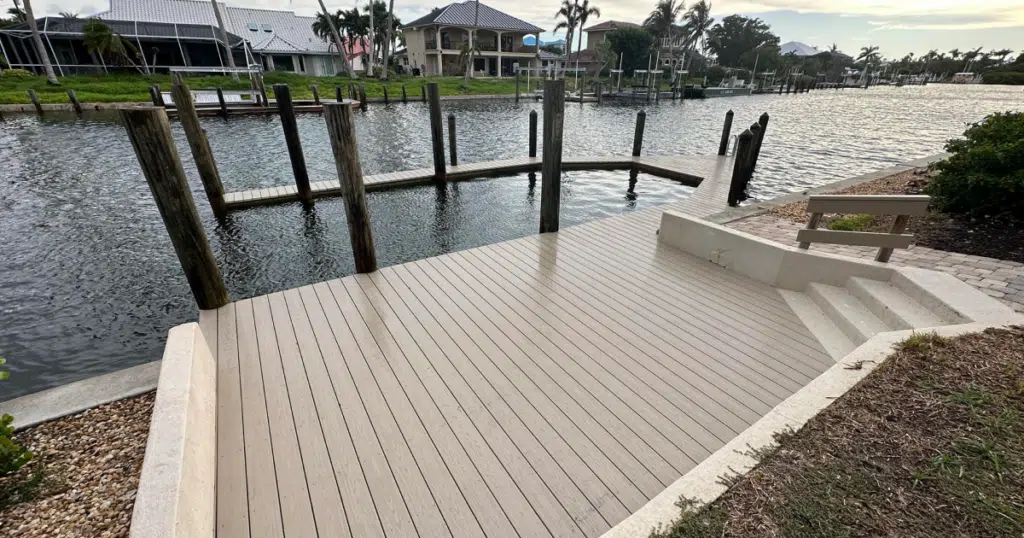
TL;DR: Replacing a seawall involves heavy machinery, precise engineering, and strict adherence to Florida regulations. The active construction phase typically lasts two to three weeks, depending on weather and inspections. We handle the permitting process with the local agency before any digging begins. You will see daily progress from demolition and excavation to the final grading of your yard.
Protecting Your Waterfront Investment
Living on a canal in Cape Coral is a dream for many. You have direct access to the water and beautiful views. But that lifestyle depends entirely on the strength of your seawall.
A failing wall puts your land and your home at risk. You know you need to fix it to stop erosion. However, the thought of a construction project in your backyard is stressful. You worry about the noise. You worry about the mess. You worry about the project dragging on for months.
These are valid concerns. You deserve to know exactly what is happening at your property. We believe in total transparency. Here is the roadmap for your project so you can plan your life around it.
The Hidden Phase: Permitting and Engineering
The work starts long before the first truck arrives. We cannot touch the soil without approval from the City of Cape Coral or the relevant environmental agency.
We draft detailed engineering plans first. These plans must meet strict local codes and regulations. We submit them to the city for review. This permitting process can take several weeks or even months.
You might feel like nothing is happening during this time. Please know that our office team is pushing your paperwork forward every day. We will schedule the start date as soon as the permit is in hand.
Week 1: Demolition and Foundation
The first week of construction is the loudest and messiest. It is also the most exciting because you see immediate changes to your shoreline.
Site Preparation and Access
Our crew arrives with heavy machinery. We lay down tracks or mats to protect your driveway where possible. We remove fences or obstacles to create a path to the water.
Excavation and Removal
We dig out the soil behind your existing wall. If we are replacing an old wall, we remove the concrete or vinyl. This creates a trench for the new structure. You will see large piles of dirt in your yard. This is temporary.
Setting the Panels
We install the new seawall panels into the ground. Whether we use vinyl sheet piling or concrete slabs, we drive them vertically into the soil. We ensure they reach the proper depth for maximum stability. This forms the primary barrier against the water.
Week 2: Structure and Strength
The wall looks like a wall now, but it needs strength. This week focuses on tying everything together to ensure durability.
Installing Tie-Backs
A vertical wall cannot stand up to water pressure alone. We install long steel rods called tie-backs. These anchor the wall to deadmen (concrete blocks) buried deep in your yard. This prevents the wall from leaning forward over time.
Forming the Cap
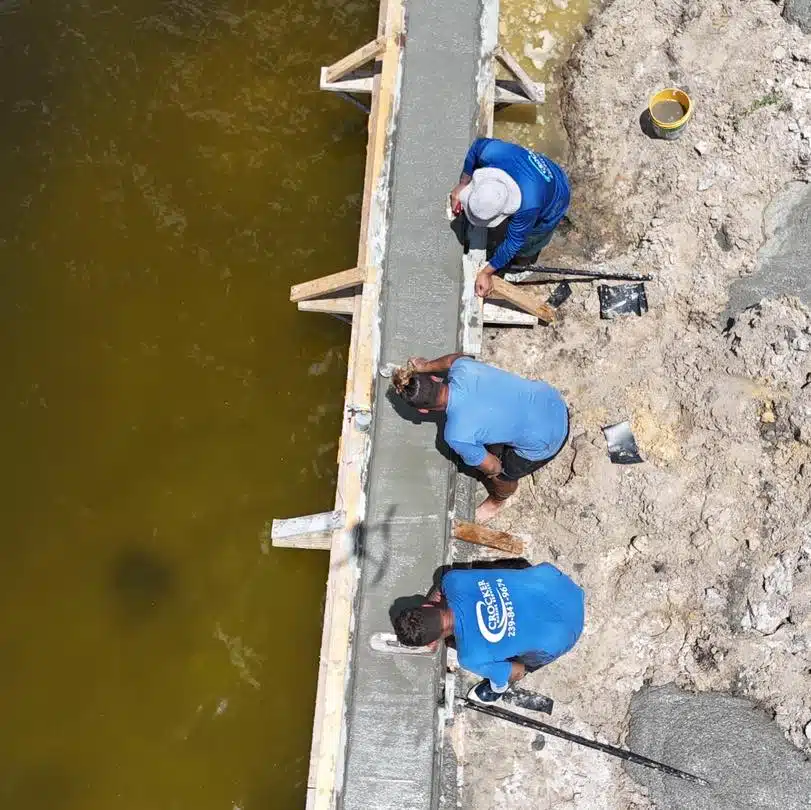
We build wooden forms along the top of the panels. This creates the mold for your concrete cap. We place steel rebar inside these forms for reinforcement.
Pouring the Concrete
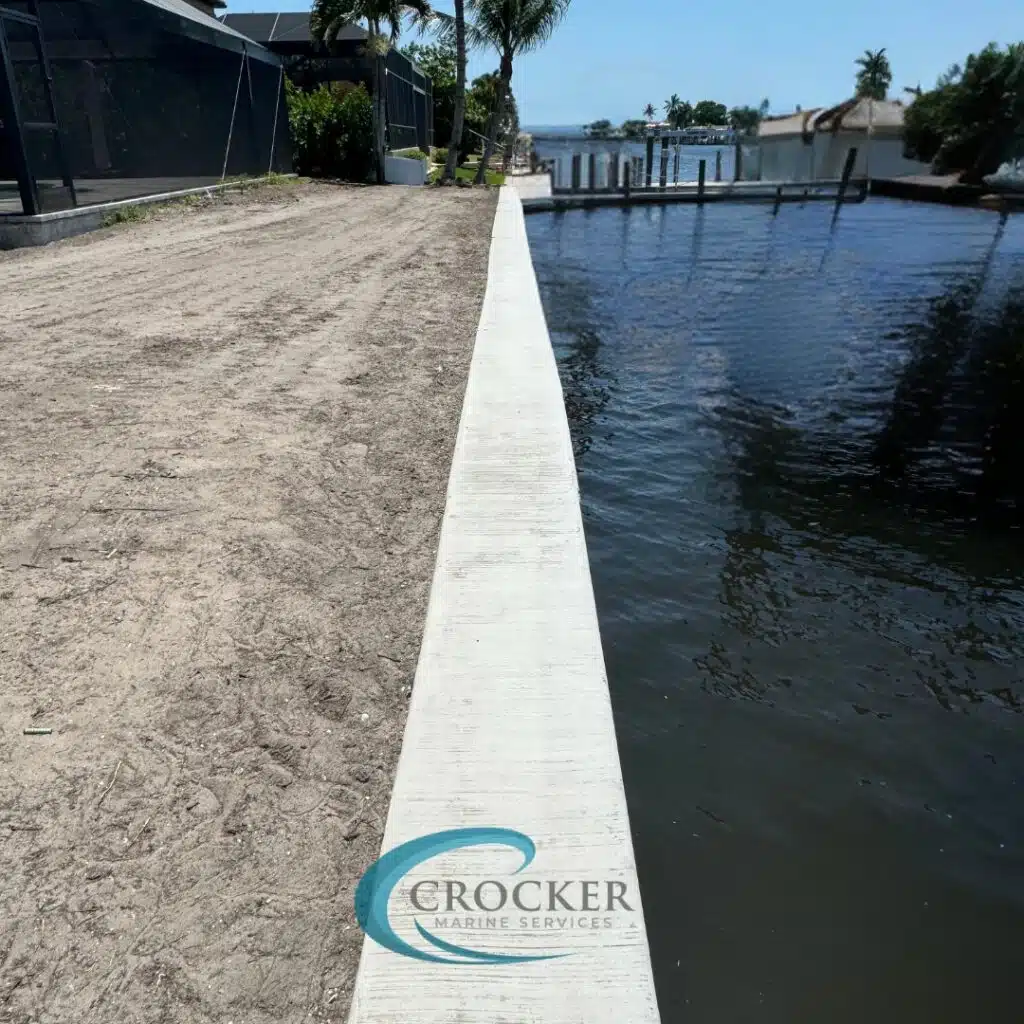
A concrete truck arrives to pour the cap. This bonds the panels and tie-backs into one solid unit. The concrete needs time to cure and harden. We may leave the site quiet for a day or two while this happens.
Week 3: Restoration and Finish
The heavy lifting is done. Now we focus on putting your yard back together and ensuring proper drainage.
Backfilling and Grading
We push the dirt piles back against the new wall. We compact the backfill to prevent future sinking. Our team grades the land so water flows away from your home.
Final Inspections
The city inspector visits to review the work. They check the structural integrity and safety features. We do not sign off until they are happy.
Site Cleanup
We remove the machinery and debris. We smooth out the tracks in your yard. Many homeowners choose to lay new sod immediately after we leave.
Factors Influencing the Timeline
Every marine construction project is unique. Several factors can extend or shorten the process.
- Weather: Summer storms in Southwest Florida can pause work. Heavy rain makes the soil unstable.
- Soil Conditions: Hard rock or extremely soft mud can change the construction method slightly.
- Access: Tight side yards may require smaller equipment, which takes longer.
- Permit Delays: Sometimes the city requires extra revisions before we start.
We build buffer time into our schedules for this reason. We keep you informed if the timeline shifts.
Seawall Maintenance Tips
Once your new seawall is installed, you want it to last. Here are a few maintenance tips to extend its lifespan.
- Inspect Regularly: Look for cracks in the cap or loss of soil behind the wall.
- Clear Weep Holes: Ensure the drainage holes in the wall are not clogged. This relieves water pressure from the soil.
- Watch Water Levels: Extreme tides can put stress on the structure.
- Protect the Cap: Avoid planting large trees right next to the wall. Roots can damage the concrete.
Quick Answers
How long does the actual construction take?
Once permits are approved, the physical work usually takes about two to three weeks. This timeline depends on weather, soil conditions, and inspection schedules.
Will I have access to my backyard?
Access will be limited. Heavy equipment like excavators will be moving through your property. It is safer to stay clear of the work zone until we finish the installation process.
Do I need to be home during the day?
You generally do not need to be home. Our crews know exactly what to do. We just need clear access to the waterfront through your side yard.
What if you find something unexpected underground?
Our True Price Guarantee protects you here. We do not charge extra for hidden issues unless you change the project scope. The price we quote is the price you pay.
The True Price Guarantee
Most contractors give you an estimate. Then they find a rock or a root and send you a bill for "unforeseen conditions."
We do not do that.
Our True Price Guarantee means the price we quote is the final price. We take the risk on underground obstacles. You never have to worry about a surprise invoice in the middle of the project.
Short-Term Process, Long-Term Protection
A new seawall is a major construction project. It involves noise, mud, and heavy equipment. But it is a temporary inconvenience for decades of protection.
We specialize in high-quality marine construction. We move fast without cutting corners. You get a strong barrier against erosion and storms. Your property value goes up. Best of all, you get peace of mind knowing your land is safe.
Secure Your Shoreline Today
Do not wait until your current wall collapses. That turns a planned project into an emergency. Call Crocker Marine Services today for a consultation. We will assess your shoreline and give you a guaranteed price for a new wall.
Key Takeaways
- Permits take time. The city review happens before we start digging.
- Week 1 is noisy. Demolition and panel installation happen first.
- Week 2 adds strength. We install tie-backs and pour the concrete cap.
- Week 3 is for cleanup. We backfill the soil and grade the yard.
- Weather plays a role. Rain can cause minor delays in the schedule.
- Price is fixed. Our True Price Guarantee covers unexpected underground issues.
- Yard access is required. We need a clear path for our excavators.
- Inspections are mandatory. The city checks our work at multiple stages.