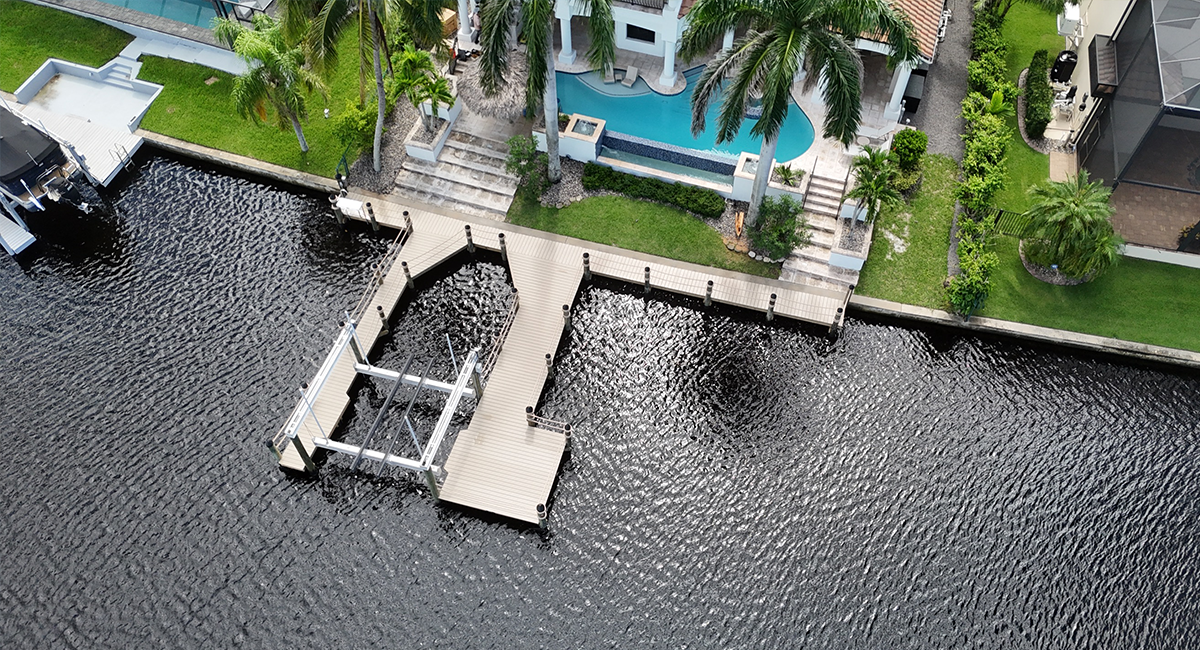
You stand at the edge of your Southwest Florida waterfront property, envisioning a beautiful new dock or convenient boat lift. But there’s one critical question that could make or break your project: Do you have enough water depth?
Dredging creates adequate water depth for dock access and boat lift installation when natural depths fall short. Understanding when dredging is necessary and navigating the permitting process can save you time, money, and frustration. This comprehensive guide explains everything Southwest Florida waterfront property owners need to know about dredging requirements, costs, permits, and how to coordinate dredging with marine construction projects.
Understanding Dredging for Marine Construction
Dredging is the process of removing sediment, sand, and debris from the bottom of waterways to increase water depth. For residential waterfront properties, dredging serves a practical purpose: creating sufficient depth for boats to access docks and for boat lifts to operate properly.
Over time, natural processes deposit sediment in canals, channels, and shoreline areas. Storm runoff carries sand and soil into waterways. Organic material accumulates on the bottom. Hurricane activity can dramatically alter underwater topography, depositing large amounts of material in previously deep areas. These processes gradually reduce water depth, potentially making your waterfront inaccessible for the vessels you own or plan to purchase.
The relationship between water depth and marine construction is straightforward. Your dock needs enough depth for boats to approach without running aground. Your boat lift requires adequate clearance beneath the vessel when raised and sufficient depth when lowered. Without proper depth, even the most expertly constructed dock or boat lift becomes unusable.
Minimum Depth Requirements for Vessels and Lifts
Understanding depth requirements starts with knowing your vessel’s draft, which is the vertical distance between the waterline and the lowest point of the boat. Different vessel types require different minimum depths.
Small boats and personal watercraft typically need 2 to 3 feet of water depth. These include jet skis, small fishing boats, and shallow-draft vessels designed for Florida’s inland waters. Even these smaller craft benefit from an additional foot of clearance to account for water level fluctuations and to avoid stirring up bottom sediment.
Medium recreational boats ranging from 20 to 30 feet usually require 3 to 5 feet of depth. This category includes popular center console fishing boats, bowriders, and smaller cabin cruisers common throughout Southwest Florida. You should add at least 1 to 2 feet beyond the stated draft for safe operation.
Larger vessels and yachts over 30 feet often need 5 to 8 feet or more, depending on hull design. Deep-V hulls draw more water than flatter hull configurations. Sailboats require special consideration due to keel depth, with some requiring 6 feet or more even for modest-sized vessels.
Boat lift installation adds another layer of depth requirements. The lift itself occupies space below the waterline. Cradle-style lifts need approximately 2 to 3 feet of depth just for the lift structure when in the down position. Add your boat’s draft to this figure, plus another foot for clearance, and you quickly see how depth requirements add up.
Water level fluctuations in Southwest Florida create additional considerations. Tidal areas experience regular water level changes that can expose shallow bottom conditions during low tide. Seasonal variations, drought conditions, and storm surge effects all impact usable depth. Smart property owners plan for worst-case scenarios rather than average conditions.
Assessing Your Property’s Dredging Needs
Before investing in dredging, you need an accurate assessment of current depth conditions. Several methods help property owners evaluate their situation.
The simplest approach involves using a weighted line or depth sounder to measure current depth at low tide. Take measurements at multiple points along your proposed dock route or boat lift location. Pay special attention to the shallowest spots, as these determine your limiting depth. Document these measurements and compare them to your vessel’s requirements plus the necessary clearance.
Visual signs often indicate depth problems before you measure. Discolored water in your canal compared to adjacent waterways suggests shallow conditions. Visible bottom features during normal water levels signal insufficient depth. Neighbors experiencing grounding or access difficulties point to widespread depth issues in your canal or channel.
Sediment accumulation patterns provide clues about dredging needs. Properties at the end of canals or in areas with restricted water flow tend to accumulate sediment faster. Locations near stormwater outflows receive regular deposits of sand and soil. Areas that experienced significant hurricane impacts may have dramatically different depth profiles than before the storm.
Professional evaluation provides the most reliable assessment. Marine contractors experienced in Southwest Florida conditions can quickly identify depth issues and recommend solutions. A comprehensive site evaluation considers not just current depth but also bottom composition, access for dredging equipment, and environmental factors that might affect permitting.
Southwest Florida Dredging Challenges
Southwest Florida’s unique coastal environment creates specific dredging considerations that differ from other regions. Understanding these local factors helps property owners make informed decisions.
The sediment composition in Southwest Florida waterways varies considerably. Sandy bottoms are common in areas near Gulf beaches and barrier islands. These materials dredge relatively easily but may accumulate quickly after storms. Clay and muck sediments appear in inland canals and areas with organic material buildup. These denser materials require different dredging approaches and disposal methods.
Seasonal water level variations affect both the need for dredging and the timing of projects. Southwest Florida’s wet season from June through September brings higher water levels that can mask depth problems. Dry season conditions from October through May reveal the true limiting depths. Many property owners discover they need dredging only after purchasing a larger boat or experiencing low water periods.
Hurricane and storm impacts have reshaped many Southwest Florida waterways in recent years. Major storms move massive amounts of sediment, depositing material in previously deep channels while scouring other areas. Properties that had adequate depth before Hurricane Ian may now face significant dredging needs. Storm debris buried in sediment can complicate dredging operations and increase costs.
Local waterway characteristics influence dredging requirements. Dead-end canals experience more sediment accumulation than through-flow channels. Properties in older developments may have canals that were originally dredged to minimal depths and now require deepening. Areas with seawall deterioration often have sediment accumulation at the base of failing structures.
Navigating Permitting Requirements
Dredging in Florida requires careful attention to regulatory requirements. Multiple agencies have jurisdiction over waterway modifications, and securing proper permits is non-negotiable.
The Florida Department of Environmental Protection oversees most residential dredging projects. DEP permits are required for dredging in state-owned submerged lands and waters. The application process requires detailed project plans showing the area to be dredged, depth of excavation, volume of material to be removed, and disposal methods. Environmental resource permits address water quality protection, impacts to aquatic vegetation, and protection of marine life.
Processing times for DEP permits typically range from 60 to 90 days for straightforward residential projects, though complex situations can take considerably longer. Complete and accurate applications move through the system faster than those requiring additional information or modifications.
The U.S. Army Corps of Engineers maintains jurisdiction over waters considered navigable under federal law. Many Southwest Florida canals and waterways fall under Corps authority. Projects in these areas may require both state and federal permits. The Corps focuses on navigation impacts, effects on interstate commerce, and compliance with federal environmental laws.
Coordination between agencies is essential. Some projects qualify for streamlined permitting through joint application processes. Working with experienced professionals familiar with Southwest Florida permitting can significantly reduce delays and avoid costly mistakes.
Certain dredging activities may qualify for exemptions or general permits that simplify the process. Maintenance dredging to restore previously authorized depths sometimes qualifies for expedited review. Small projects meeting specific criteria may proceed under general permits rather than requiring individual authorization.
Dredging Methods for Residential Properties
Two primary dredging methods serve residential waterfront properties, each with distinct advantages and appropriate applications.
Hydraulic dredging uses a powerful pump to create suction that lifts sediment and water as a slurry. This mixture travels through a pipeline to a disposal or dewatering site. Hydraulic dredging works exceptionally well for sandy materials and areas where the dredged material can be pumped to an upland disposal location. The method is relatively clean, with minimal turbidity if properly executed. Equipment can often operate from the water, reducing impacts to landscaping and existing structures.
Mechanical dredging employs excavators or clamshell buckets to physically remove sediment from the bottom. This approach works better for consolidated materials, clay, or situations where debris is present. Mechanical methods provide more precise depth control and work well in confined spaces. However, the equipment typically requires land access, and the process can create more turbidity in the water column.
For residential dock and boat lift projects in Southwest Florida, hydraulic dredging is most common when conditions allow. The method’s efficiency and relatively low impact make it ideal for canal and shoreline work. Properties with good access and suitable disposal options benefit most from this approach.
Equipment access requirements significantly influence method selection. Hydraulic dredges need water access for the dredge unit and pipeline routes to disposal areas. Mechanical equipment requires land access for excavators and trucks to remove material. Properties with limited access may face higher costs or require creative solutions to position equipment.
Managing Dredge Spoil Disposal
Removing sediment from the water is only half the challenge. Properly managing the dredged material, called spoil, is equally important and heavily regulated.
Florida law classifies dredged material and establishes disposal requirements based on sediment characteristics. Clean sand and sediment free from contaminants have more disposal options than materials containing pollutants or excessive organic content. Testing may be required to characterize the material before disposal.
On-site disposal offers the most economical solution when property conditions allow. Using dredged sand to fill low areas, enhance landscaping, or build up elevation can eliminate hauling costs. However, the material must be contained during dewatering to prevent sediment from washing back into the waterway. Proper erosion control and stormwater management are essential. Property owners need adequate space and appropriate site conditions for on-site disposal.
Off-site disposal becomes necessary when on-site options are unavailable or unsuitable. Approved disposal facilities accept dredged material, but transportation costs add significantly to project expenses. The volume of material, hauling distance, and disposal facility fees all factor into total costs.
Dewatering requirements apply regardless of disposal location. Dredged slurry contains far more water than solid material. Allowing this water to separate and drain properly prevents environmental violations and reduces the volume of material requiring final disposal. Geotextile bags, sediment basins, or designated dewatering areas facilitate this process.
Environmental regulations prohibit disposing of dredged material in wetlands, allowing uncontrolled discharge into waters, or creating conditions that harm water quality. Violations carry significant penalties and can halt your entire marine construction project.
Understanding Dredging Costs
Dredging costs vary widely based on multiple factors. Understanding these variables helps property owners budget appropriately and avoid surprises.
The volume of material requiring removal is the primary cost driver. Dredging is typically priced per cubic yard of sediment removed. A small area requiring modest deepening costs far less than extensive dredging along a long canal frontage. Accurate volume calculations require knowing the area to be dredged and the depth of cut needed to achieve target depths.
Bottom conditions affect both equipment requirements and labor efficiency. Soft sediments dredge faster than consolidated materials. Rocky bottoms or areas with debris slow progress and may require specialized equipment. Unknown subsurface conditions can lead to cost overruns if not properly investigated before bidding.
Access and mobilization costs reflect the expense of moving equipment to your property and establishing work areas. Properties with easy water access and nearby disposal sites incur lower costs than remote locations requiring extensive setup. Mobilization represents a larger percentage of total cost for small projects than large ones.
Permitting expenses include application fees, environmental studies if required, and professional services to prepare permit documents. Complex projects or environmentally sensitive locations face higher permitting costs. Budget $2,000 to $10,000 or more for permitting depending on project scope and site conditions.
Disposal costs depend on whether material stays on-site or requires hauling to approved facilities. On-site disposal with proper containment and erosion control is most economical. Off-site disposal can add $20 to $50 or more per cubic yard depending on distance and facility fees.
For Southwest Florida residential projects, total dredging costs typically range from $10,000 to $50,000 or more depending on scope. Small areas requiring modest deepening fall at the lower end. Extensive canal dredging or projects with complicated access fall at the higher end. Obtaining detailed quotes from qualified contractors provides the most accurate cost estimates for your specific situation.
Maintenance Dredging Considerations
Dredging is not always a one-time solution. Understanding maintenance requirements helps property owners plan for long-term waterfront access.
Maintenance dredging frequency depends on sediment accumulation rates at your property. Properties in high-deposition areas may need attention every 5 to 10 years. Locations with minimal sediment input might go 15 to 20 years or longer between dredging. Monitoring depth conditions annually helps you anticipate when maintenance becomes necessary.
Several factors accelerate sediment accumulation. Properties near stormwater outflows receive regular deposits with each rain event. Dead-end canals lack flushing action that removes fine sediments. Areas with deteriorating seawalls experience soil loss that settles nearby. Vegetation die-off and organic accumulation gradually reduce depth in some locations.
Preventative measures can extend time between dredging events. Maintaining healthy seawalls prevents soil loss into waterways. Managing stormwater runoff reduces sediment input. Some property owners install sediment traps or basins that capture material before it reaches dock areas. While these measures cannot eliminate the need for eventual maintenance dredging, they can significantly extend intervals between projects.
Signs that maintenance dredging is needed include difficulty accessing your dock at low tide, propeller strikes on the bottom, reduced boat lift clearance, or visible sediment accumulation. Addressing these issues promptly prevents more extensive problems and typically costs less than waiting until conditions severely deteriorate.
Maintenance dredging to restore previously permitted depths often qualifies for simplified permitting compared to initial dredging projects. Maintaining good records of your original dredging permits and depths achieved facilitates future maintenance approvals.
Coordinating Dredging with Marine Construction
Proper sequencing of dredging and marine construction projects ensures efficient execution and optimal results. Understanding the relationship between these activities helps property owners plan effectively.
Dredging should occur before dock or boat lift installation in most cases. Achieving proper depth first allows marine contractors to build structures at correct elevations and ensures adequate clearance for vessels. Attempting to dredge around existing structures is more difficult, potentially damages those structures, and typically costs more than dredging before construction.
The ideal sequence begins with permitting for both dredging and marine construction simultaneously when possible. This parallel approach saves time compared to sequential permitting. Once permits are secured, complete dredging and allow the site to stabilize before beginning dock or boat lift installation. This progression minimizes construction delays and prevents damage to new structures.
Working with a full-service marine contractor who coordinates both dredging and construction offers significant advantages. Single-source responsibility eliminates finger-pointing between separate contractors. Integrated scheduling ensures efficient progression from one phase to the next. Comprehensive project management reduces your administrative burden and provides accountability throughout the process.
Timeline expectations for combined projects typically span 4 to 8 months from initial consultation through project completion. Permitting consumes 2 to 4 months. Dredging takes days to weeks depending on scope. Dock or boat lift installation requires 2 to 6 weeks after dredging completion. Weather, permit processing times, and project complexity all influence the actual schedule.
Communication throughout the process is essential. Regular updates on permitting progress, schedule adjustments, and site conditions help property owners stay informed and make timely decisions. Experienced contractors anticipate potential issues and develop contingency plans before problems arise.
Making the Right Decision for Your Property
Deciding whether you need dredging before installing a dock or boat lift comes down to three key factors: current water depth, your vessel requirements, and regulatory compliance.
Start by accurately measuring existing depth at low water conditions. Compare these measurements to your vessel’s draft plus required clearances. If current depth is insufficient, dredging becomes necessary unless you pursue alternative solutions like floating docks or adjustable lift systems.
Consider your long-term plans. If you might upgrade to a larger boat in the future, dredging to accommodate that vessel now may be more cost-effective than dredging twice. Factor in sediment accumulation rates and maintenance requirements when evaluating the investment.
Work with experienced professionals who understand Southwest Florida conditions, permitting requirements, and marine construction best practices. Crocker Marine Services brings comprehensive expertise to dredging coordination and marine construction projects throughout the region. Licensed, insured, and committed to transparent pricing, the team handles everything from initial assessment through final installation.
The True Price Guarantee ensures you will not face unexpected change orders during your project, providing peace of mind as you invest in your waterfront property. With proper planning, appropriate permitting, and expert execution, your dredging and marine construction project will deliver years of enjoyment and reliable waterfront access.
Questions About Dredging for Your Property?
Determining whether you need dredging before installing a dock or boat lift requires careful evaluation of your specific situation. Every property presents unique conditions, and experienced guidance makes the difference between a smooth project and a frustrating experience.
Contact Crocker Marine Services at (239) 841-9674 to schedule a free consultation. The team will assess your property’s depth conditions, discuss your vessel requirements, explain permitting requirements, and provide transparent pricing for your project. With expertise throughout Southwest Florida from Marco Island to Sarasota, Crocker Marine Services delivers the professional marine construction solutions you need with the integrity you deserve.