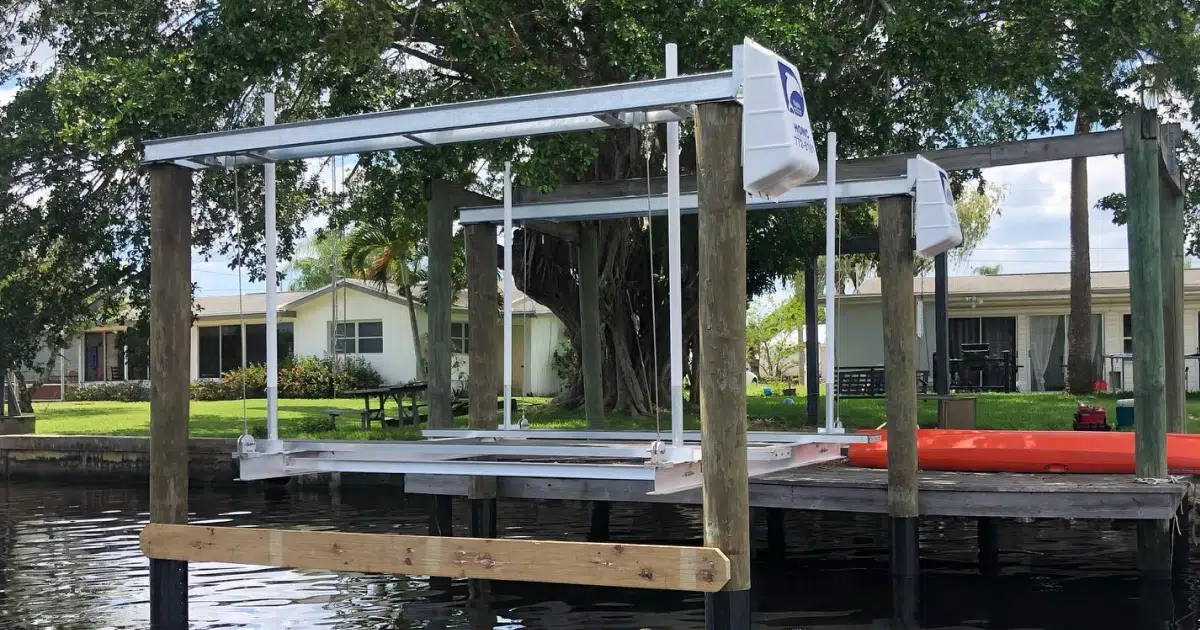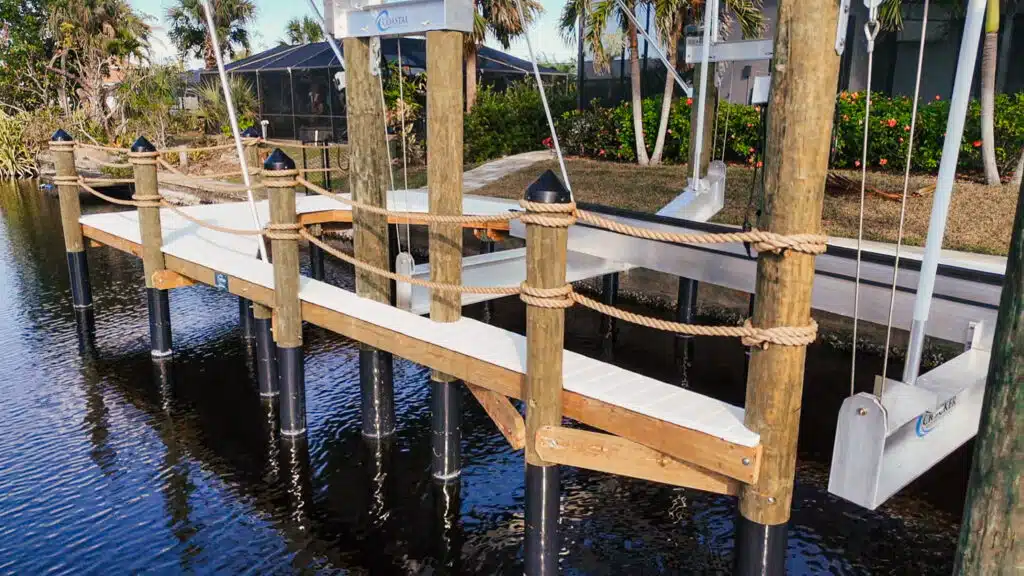
You walk down to your dock on a beautiful Southwest Florida morning, ready to take your boat out for the day. As you lower your vessel from the lift, you notice the carpet on the bunk boards looks worn and frayed. You might wonder if this is normal wear or a sign of something more serious that needs attention.
Boat lift bunk boards provide the foundation for safely supporting your vessel when it’s out of the water. Understanding what they are, how they function, and when they need replacement can save you from expensive hull repairs and keep your boat in pristine condition. At Crocker Marine Services, we help Southwest Florida boat owners protect their investments with expert bunk board service and maintenance. You can also find us on Google to read reviews from satisfied customers throughout Cape Coral, Fort Myers, and Naples.
This guide explains everything you need to know about boat lift bunk boards, from materials and covering options to warning signs that replacement is overdue.
What Are Boat Lift Bunk Boards?
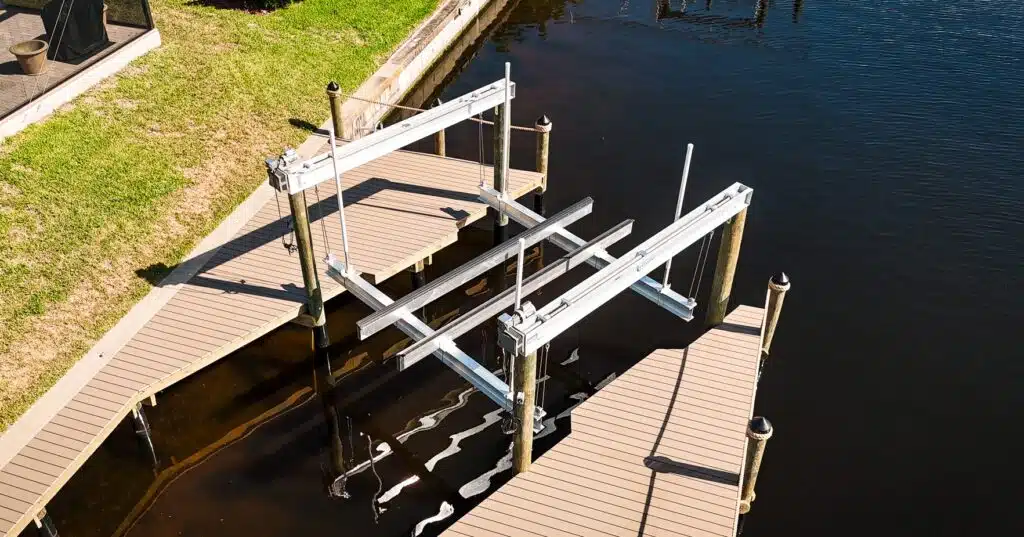
Boat lift bunk boards are the horizontal support beams that cradle your boat when it sits on the lift. These boards run lengthwise along the bottom of your vessel, typically positioned to align with the hull’s strongest structural points. The boards attach to the lift frame and create a stable platform that distributes your boat’s weight evenly.
Most bunk boards consist of treated lumber covered with either carpet or rubber material. The covering creates a protective barrier between the hard wood and your boat’s gelcoat or hull surface. Without this cushioning layer, direct contact between wood and fiberglass would cause scratches, scuffs, and potentially serious damage over time.
The boards work together with your boat lift’s cradle system to keep your vessel secure and properly positioned. When functioning correctly, bunk boards prevent your boat from shifting, rocking, or settling unevenly while out of the water.
The Critical Role of Bunk Boards in Boat Protection
Bunk boards serve multiple essential functions for boat owners in Southwest Florida’s marine environment:
Weight Distribution
Your boat weighs thousands of pounds, and that weight needs proper distribution to avoid hull stress. Bunk boards spread the load across reinforced sections of your hull designed to handle pressure. Poor weight distribution can lead to hull deformation, stress cracks, or even structural failure in extreme cases.
Surface Protection
The covering on bunk boards creates a soft barrier that prevents scratches and gouges. Every time you raise or lower your boat, slight movements occur. Quality bunk board covering absorbs these movements without damaging your gelcoat finish.
Positioning Stability
Properly installed bunk boards keep your boat centered on the lift and prevent lateral movement. This stability matters during storms, high winds, or when wakes from passing boats create water movement around your dock. Stable positioning also makes launching and retrieving your boat safer and easier.
Moisture Management
Good bunk board systems allow air circulation under your hull, which helps prevent moisture buildup that can lead to osmotic blistering or other water-related damage to fiberglass hulls.
Bunk Board Materials: What You Need to Know
The wood used for bunk boards must withstand constant exposure to Southwest Florida’s harsh marine conditions. Several material options exist, each with specific characteristics:
Pressure-Treated Lumber
Most bunk boards use pressure-treated southern yellow pine rated for marine applications. The treatment process infuses preservatives deep into the wood fibers, providing resistance to rot, decay, and marine borers. This lumber offers an excellent balance of strength, durability, and cost-effectiveness for saltwater environments.
Marine-Grade Hardwoods
Some boat owners prefer hardwoods like treated oak or specialized marine lumber. These materials provide exceptional strength and longevity but come at a higher price point. Hardwoods resist warping better than softer woods and can support heavier vessels.
Composite Materials
Newer composite bunk board options combine wood fibers with synthetic materials to create boards that resist rot and decay while maintaining strength. These products cost more upfront but may last longer in saltwater conditions.
Dimensional Requirements
Bunk boards typically measure 2×6 or 2×8 inches, depending on your boat’s size and weight. Larger vessels need wider boards to distribute weight properly. The length varies based on your boat’s hull design and the contact points needed for proper support.
Carpet vs. Rubber Covering: Which Is Right for Your Boat?
The covering material on your bunk boards directly contacts your hull, making this choice important for long-term boat protection.
Marine Carpet Covering
Advantages:
- Soft, cushioned surface that’s gentle on gelcoat
- Excellent grip that holds boats securely in position
- Widely available and familiar to most marine service providers
- Cost-effective replacement option
- Works well with most hull designs
Considerations:
- Absorbs and holds water, which increases drying time
- Can trap sand, dirt, and debris against your hull
- Requires more frequent replacement than rubber
- May develop mold or mildew in humid climates
- Fibers break down faster in intense UV exposure
Rubber Bunk Covering
Advantages:
- Does not absorb water, allowing faster drying
- Resists UV degradation better than carpet
- Easier to clean and maintain
- Longer lifespan in saltwater environments
- Does not trap debris against your hull
Considerations:
- Higher initial material cost
- Less cushioning than thick marine carpet
- Can become slippery when wet
- May require more precise boat positioning
- Not ideal for all hull shapes
For Southwest Florida conditions, many boat owners find that rubber covering performs better over time. The intense sun, high humidity, and frequent afternoon storms create challenging conditions for carpet materials. However, your specific boat, lift setup, and preferences should guide your choice.
How Long Do Bunk Boards Last in Southwest Florida?
The lifespan of boat lift bunk boards depends on several factors specific to our coastal environment:
Typical Lifespan Ranges:
- Carpet covering: 2 to 4 years
- Rubber covering: 4 to 7 years
- Treated lumber boards: 8 to 15 years
- Composite boards: 15 to 25 years
Environmental Factors Affecting Longevity:
Southwest Florida’s climate accelerates wear on marine equipment. Intense UV radiation breaks down materials faster than in northern climates. Salt water causes corrosion and deterioration. High humidity promotes mold, mildew, and wood rot. Frequent temperature fluctuations expand and contract materials, leading to cracking and splitting.
Usage Patterns:
Boats used daily experience more wear on bunk boards than vessels launched weekly. Each launch and retrieval creates friction between the covering and your hull. Boats stored on lifts year-round put constant pressure on the boards, while seasonal use allows materials to dry and rest between boating seasons.
Maintenance Impact:
Regular cleaning, inspection, and minor repairs significantly extend bunk board life. Boat owners who rinse their lifts after use, apply UV protectants, and address small issues promptly get more years from their bunk board systems.
Warning Signs Your Bunk Boards Need Replacement
Recognizing problems early prevents hull damage and keeps your boat safe. Watch for these indicators that your bunk boards need attention:
Worn or Frayed Carpet Covering
Carpet fibers wear down from repeated contact with your hull. When you see backing material showing through, bare spots developing, or edges fraying significantly, replacement time has arrived. Worn carpet loses its protective cushioning and can actually scratch your gelcoat.
Wood Deterioration
Inspect the lumber itself for these problems:
- Soft spots that compress when you press on them
- Visible rot or discoloration
- Splitting or cracking along the grain
- Warping that creates uneven support
- Loose or missing fasteners
Improper Boat Seating
Your boat should settle into the same position every time you raise the lift. If your vessel sits crooked, tilts to one side, or shifts position unexpectedly, the bunk boards may have deteriorated unevenly or moved out of alignment.
Visible Hull Marks
New scratches, scuff marks, or discoloration on your hull where it contacts the bunks indicate that the protective covering has failed. Address this immediately to prevent further damage.
Sagging or Bowing
Bunk boards that sag in the middle or bow under your boat’s weight have lost structural integrity. This creates pressure points that can damage your hull and indicates the boards need replacement soon.
What Happens If You Ignore Worn Bunk Boards?
Delaying bunk board replacement creates several serious risks:
Hull Damage Progression
Minor scratches from worn covering quickly become deep gouges that penetrate the gelcoat. Once damage reaches the underlying fiberglass layers, moisture can infiltrate and cause delamination. Repairing this level of damage costs thousands of dollars compared to the few hundred dollars for timely bunk board replacement.
Structural Stress
Deteriorated bunk boards create uneven support that concentrates your boat’s weight on small areas. This stress can crack stringers, damage bulkheads, or cause hull flexing that compromises your vessel’s structural integrity.
Safety Concerns
Failed bunk boards can allow your boat to shift or fall from the lift. This creates danger for anyone nearby and can cause catastrophic damage to your vessel. The risk increases during storms or high winds when forces on your lift system multiply.
Decreased Resale Value
Visible hull damage from neglected bunk boards reduces your boat’s value significantly. Prospective buyers recognize signs of poor maintenance and either walk away or demand substantial price reductions.
The Bunk Board Replacement Process
Professional bunk board replacement follows a systematic approach:
Step 1: Inspection and Assessment
A qualified marine technician examines your current bunk boards, lift frame, and boat hull. This assessment identifies all issues and determines the scope of work needed. The inspection includes measuring for proper board sizing and positioning.
Step 2: Material Selection
Based on your boat type, lift configuration, and preferences, the technician recommends appropriate lumber and covering materials. This consultation considers your budget and how you use your boat.
Step 3: Removal of Old Boards
Your boat must be safely supported while old bunk boards are removed. Professional service includes proper vessel support to prevent any risk during the replacement process.
Step 4: Frame Inspection and Repair
With boards removed, technicians inspect the lift frame for corrosion, damage, or needed adjustments. Any frame issues get addressed before new boards are installed.
Step 5: New Board Installation
Fresh lumber is cut to precise measurements and covered with your chosen material. Boards are positioned for optimal hull support and secured with marine-grade fasteners. Proper installation ensures even weight distribution and correct boat positioning.
Step 6: Final Adjustment and Testing
After installation, your boat is carefully lowered onto the new bunks. The technician checks positioning, makes any needed adjustments, and tests the lift through several cycles to verify everything functions correctly.
Bunk Board Replacement Costs in Southwest Florida
Several factors influence the total cost of bunk board replacement:
Material Costs:
- Standard pressure-treated lumber with carpet: Most affordable option
- Marine-grade hardwood with carpet: Moderate price increase
- Composite boards with rubber covering: Premium pricing
- Specialty materials or custom configurations: Highest cost
Labor Considerations:
Replacement time varies based on lift type, boat size, and accessibility. Simple replacements on standard lifts take less time than complex custom configurations. Labor represents a significant portion of total cost, but professional installation ensures proper function and longevity.
Additional Services:
Your replacement project might include related work like lift frame repairs, hardware replacement, or adjustments to guide posts or brackets. Addressing these items during bunk board replacement makes sense and can prevent future problems.
Value of Professional Service:
Professional installation provides peace of mind through proper materials, correct positioning, and warranty protection. Experienced technicians spot potential issues and ensure your boat sits securely on the new bunks. This expertise prevents the costly mistakes that can occur with DIY approaches.
Maintenance Tips to Extend Bunk Board Life
Proper care maximizes your bunk board investment:
Regular Inspection Schedule:
- Monthly visual checks for obvious wear or damage
- Quarterly detailed inspections of covering condition
- Annual professional assessment of wood integrity
- Post-storm inspections after severe weather
Cleaning and Care:
Rinse your lift and bunk boards with fresh water after each use to remove salt, sand, and debris. For carpet bunks, occasional scrubbing with a soft brush removes buildup. Rubber bunks benefit from periodic cleaning with mild soap and water.
UV Protection:
Apply marine-grade UV protectant products to exposed wood and covering materials. These treatments slow deterioration from sun exposure. Reapply according to product recommendations, typically every few months.
When to Call Professionals:
Contact marine service experts when you notice any warning signs, when covering shows significant wear, or when boards have been in place for several years. Professional evaluation catches problems before they become emergencies.
Why Professional Bunk Board Service Matters
Working with experienced marine contractors provides important advantages:
Proper Sizing and Positioning:
Bunk board placement requires knowledge of hull design and weight distribution principles. Incorrect positioning can damage your boat even with new materials. Professionals understand how different hull types need different support configurations.
Quality Materials:
Marine service companies source materials specifically rated for saltwater applications. Big box store lumber may not have the treatment levels needed for our environment. Professional-grade covering materials last longer and protect better than consumer alternatives.
Installation Expertise:
Proper fastener selection, board attachment methods, and covering installation techniques all impact performance and longevity. Experienced technicians apply best practices developed through years of marine construction work.
Comprehensive Service:
Professional service includes related inspections and maintenance that DIY approaches often miss. Technicians check your entire lift system and identify other issues before they cause problems.
Crocker Marine Services: Your Bunk Board Experts
Crocker Marine Services brings extensive experience to boat lift maintenance throughout Southwest Florida. Our team understands the unique challenges that saltwater, intense sun, and coastal weather create for marine equipment.
We provide comprehensive bunk board services including inspection, replacement, and ongoing maintenance. Our technicians work with all lift types and boat sizes, from small fishing boats to large cruisers. Every project receives the same attention to detail and commitment to quality that has made us Southwest Florida’s trusted marine construction partner.
Our True Price Guarantee means you receive transparent pricing with no surprise costs or change orders. We evaluate your needs thoroughly and provide accurate quotes upfront, so you know exactly what to expect.
Whether your bunk boards show obvious wear or you want a professional assessment of their condition, our team stands ready to help. We serve boat owners throughout Cape Coral, Fort Myers, Naples, Bonita Springs, Sanibel, Captiva, Marco Island, and surrounding Southwest Florida communities.
Protect Your Investment with Proper Bunk Board Maintenance
Boat lift bunk boards play a vital role in protecting your vessel from damage while providing stable, secure storage between outings. Understanding the materials, covering options, and warning signs of wear helps you maintain your boat properly and avoid expensive repairs.
Regular inspection and timely replacement keep your boat safe and your hull in excellent condition. While bunk boards represent a relatively small investment compared to your boat’s value, their condition directly impacts your vessel’s long-term integrity.
Don’t wait until worn bunk boards damage your hull. If you notice any warning signs or your boards have been in service for several years, schedule a professional inspection. Our experienced team can assess your current setup, recommend appropriate solutions, and provide expert installation that protects your boat for years to come.
Contact Crocker Marine Services at (239) 841-9674 to schedule your bunk board inspection. Let our licensed marine construction professionals help you maintain your boat lift system and protect your valuable investment.
SEO Metadata
SEO Optimized URL Slug:
/blog/boat-lift-bunk-boards-replacement-guide
SEO Optimized Meta Title:
Boat Lift Bunk Boards | When to Replace & Maintenance Guide
SEO Optimized Meta Description:
Learn about boat lift bunk boards, when replacement is needed, signs of wear, material options & how proper maintenance protects your vessel in Southwest Florida.
Primary Keyword:
boat lift bunk boards
Related Keywords:
bunk board replacement, boat lift bunks, when replace bunk boards, bunk board maintenance, boat lift carpet, bunk board materials, boat lift support, bunk board service, marine carpet bunks, rubber bunk boards, boat lift maintenance, hull protection, Southwest Florida boat lifts