When you stand at the edge of your waterfront property, imagining the perfect dock for your home, one critical decision stands between you and that vision: should you install a fixed dock or a floating dock? This choice affects everything from your daily boating experience to your long-term maintenance costs, and in Southwest Florida’s unique marine environment, making the right decision requires understanding how each dock type performs in our specific conditions.
The debate between floating dock vs fixed dock installations has intensified as more waterfront property owners seek the best dock solution for their needs. Each type of dock offers distinct advantages and challenges, particularly when you consider Southwest Florida’s tidal patterns, water level fluctuations, and severe weather conditions that impact our region.
Crocker Marine Services has installed hundreds of dock systems throughout Southwest Florida, from Cape Coral to Marco Island, and we’ve seen firsthand how water depth, changing water levels, and storm exposure influence which dock type delivers the best results. This comprehensive comparison examines both stationary and floating docks, helping you make an informed decision that protects your investment and enhances your waterfront lifestyle.
Understanding the Two Main Dock Types
Before weighing the pros and cons of each system, you need to understand the fundamental differences between fixed and floating dock installations and how these dock systems function in different water conditions.
What is a Fixed Dock?
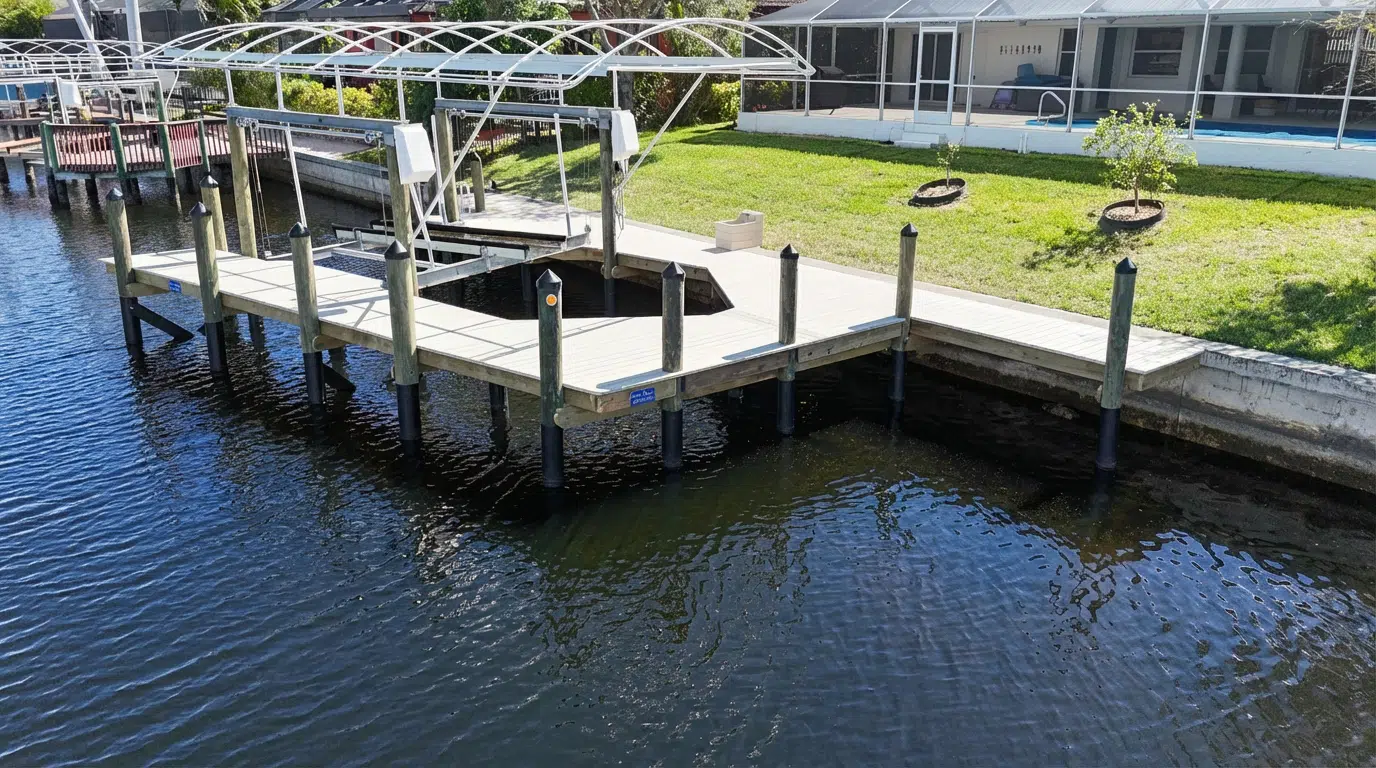
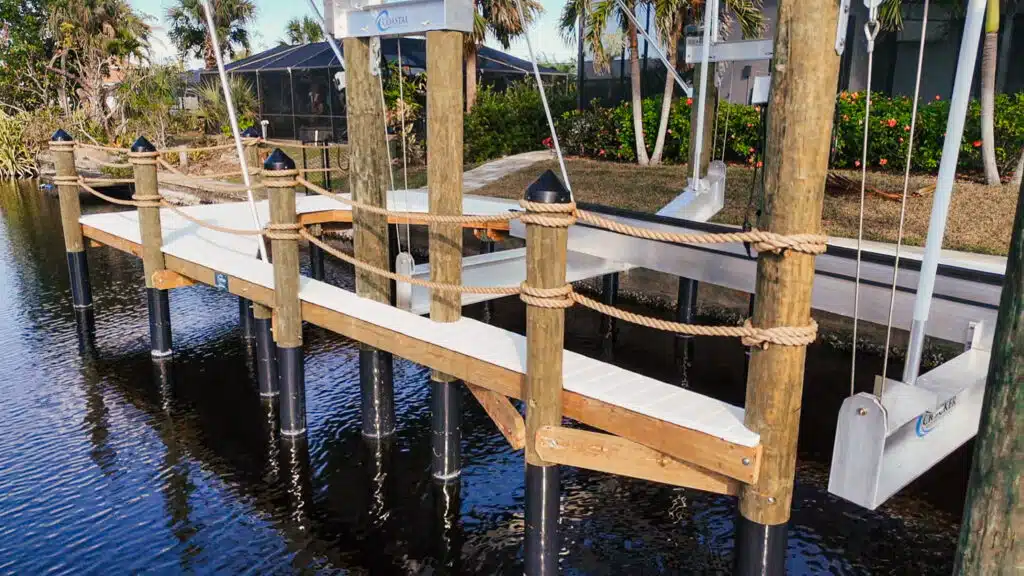
A fixed dock, also called a stationary dock, consists of a deck platform supported by pilings driven deep into the body of water bottom. These pilings create a stable foundation that holds the dock at a consistent height regardless of water level changes or fluctuating water levels throughout the year.
The dock deck sits on top of these pilings, creating a rigid structure that remains in place year-round. Since fixed docks are anchored directly to the bottom, they don’t move with waves or tides. The height of the pilings determines how high the deck sits above the water surface. This fixed elevation means the distance from your dock to your watercraft changes as water levels fluctuate with tides and seasonal variations.
What is a Floating Dock?
A floating dock uses buoyant materials, such as foam-filled pontoons or sealed drums, to keep the dock platform on the water’s surface. Rather than being anchored to the bottom with rigid pilings, floating docks are anchored to the shore and maintain position through flexible mooring systems that allow vertical movement.
The dock rises and falls with water level changes, maintaining a consistent relationship with the water surface. Since floating docks move with the water, they adapt to water level changes automatically. Floating docks are ideal for areas with fluctuating water levels where the difference between high and low tide creates challenges for fixed dock access.
How Southwest Florida’s Water Conditions Affect Dock Selection
Southwest Florida’s coastal and inland waterways present unique conditions that significantly influence your dock selection decision and determine which type is right for your waterfront property.
Tidal Range and Water Level Fluctuations
The Gulf Coast of Southwest Florida experiences relatively modest tidal patterns compared to other coastal regions. Most areas see water level fluctuations between 2 and 4 feet under normal conditions. Understanding how tides affect your dock use helps you choose between floating and fixed docks.
This moderate tidal range means that stationary docks remain accessible and functional throughout most tidal cycles. The tide variations in our region typically don’t require the automatic adjustment that floating dock systems provide. In contrast, areas with 6-foot or greater tidal fluctuations often favor floating docks because the constant height adjustment maintains consistent boat access. Since floating docks rise and fall with the water, they maintain the same relationship to the water surface throughout tidal cycles.
Beyond tidal changes, Southwest Florida experiences seasonal water level variations related to rainfall patterns and drought conditions. The wet season can raise water levels in canals and inland waterways by several inches to over a foot compared to dry season levels. These water fluctuations affect how you use your dock throughout the year.
Fixed docks accommodate these variations without adjustment. Floating docks automatically adjust to these changes, maintaining consistent height above the water surface year-round. They fall with the water during dry conditions and rise with increased water levels during rainy periods.
Water Depth Considerations
The depth of the water plays a critical role in determining which dock type makes practical and economic sense. Fixed docks require sufficient depth to drive pilings while maintaining adequate clearance beneath the deck at low tide. In Southwest Florida, many waterfront properties have water depths ranging from 4 to 12 feet, which works well for stationary dock installations.
Shallow water areas, particularly those with depths under 3 feet at low tide, can present challenges for fixed docks. Floating docks make sense in shallower conditions, though extremely shallow water may still prevent their use. Deep water increases fixed dock construction costs because longer pilings require more material and labor. Most bodies of water in our region fall within the ideal range for fixed dock installation.
Fixed Docks: Advantages and Disadvantages
Understanding the specific benefits and limitations of fixed docks helps you evaluate whether this traditional dock type suits your property and usage patterns. Let’s examine what makes stationary docks the preferred choice for most Southwest Florida waterfront installations.
Stability and Durability Advantage
Fixed docks deliver unmatched stability. The rigid piling foundation creates a platform that doesn’t move with waves, boat wakes, water traffic, or wind. You can walk to the end of a stationary dock without experiencing the swaying, bouncing, or noise when they move that’s common with floating systems.
This stability offers several practical advantages for dock use:
- Safer for children and elderly users who may have difficulty with moving platforms
- Better for loading and unloading heavy items, fishing equipment, or supplies
- Ideal for permanent structures like covered boat slips or storage boxes
- Reduced maintenance on attached items because they don’t experience constant wear and tear
- Professional appearance that enhances property value
The durability of properly constructed fixed docks exceeds that of most floating dock systems. Quality pilings can last 30 to 50 years or more, depending on dock materials and maintenance. Since fixed docks don’t experience the constant movement that floating docks do, they’re less prone to damage from mechanical stress.
Best Applications for Fixed Docks
Fixed docks are ideal for specific situations common throughout Southwest Florida waterfront properties. Protected waterways like canals and residential channels with minimal wave action provide ideal conditions for stationary docks. Properties with consistent depth allow for efficient piling installation and predictable costs.
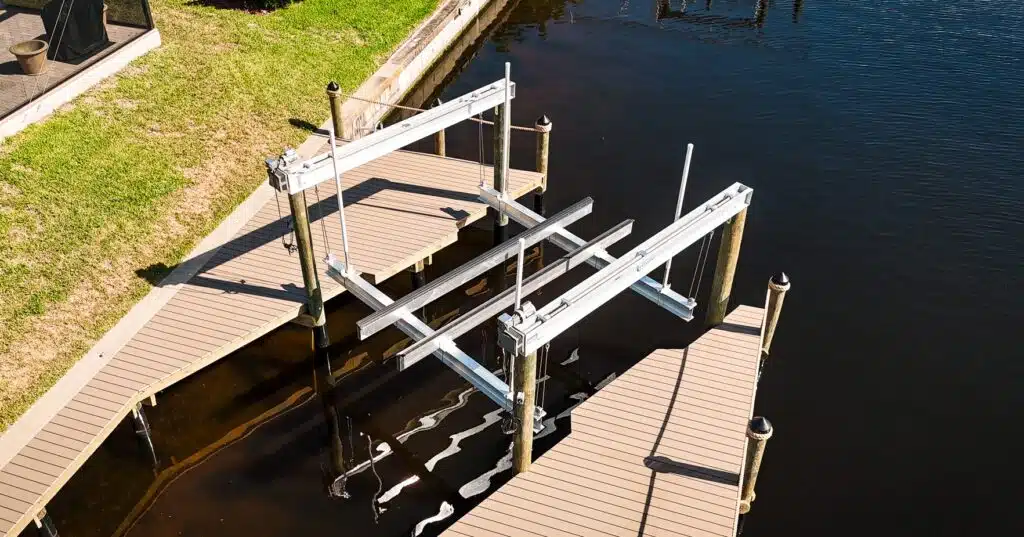
Heavy use scenarios where multiple people regularly use the dock, where watercraft frequently dock and undock, or where the dock serves as an outdoor living space benefit from fixed dock stability. Fixed docks also provide the stable foundation required for most boat lift systems, making them essential for properties where a dock is a must for boat storage.
Limitations to Consider
Despite their advantages, fixed docks present some limitations worth considering in your dock selection. Driving pilings requires specialized equipment and expertise, making the new dock installation process more complex than floating dock assembly. Fixed docks typically face more stringent permitting requirements because they involve permanent bottom disturbance.
Once installed, fixed docks cannot be easily moved. Docks don’t offer flexibility once construction is complete. During unusual drought conditions or extreme low tides, watercraft may have difficulty accessing fixed docks if water depth becomes insufficient for navigation.
Floating Docks: Advantages and Disadvantages
Floating dock systems offer distinct characteristics that make them preferable in specific situations. Understanding the floating dock vs fixed dock comparison helps you determine which type best serves your needs.
Flexibility and Adaptability Benefits
The defining benefit of floating docks is their ability to rise and fall with the water. Regardless of tide or seasonal water level changes, the dock surface remains at a constant height above the water. Boarding watercraft becomes easier because you don’t need to navigate varying step heights as water levels fluctuate throughout the day.
If water levels change significantly over time due to dredging, sedimentation, or environmental factors, floating docks adjust automatically without requiring structural modifications. They adapt to water conditions without intervention. Floating docks don’t require driving pilings into the bottom, which can be advantageous in locations with rocky bottoms or protected seagrass beds.
Modular floating dock systems, including EZ Dock configurations, can be expanded, reduced, or reconfigured more easily than stationary structures, offering flexibility as your needs change. If you’re uncertain about your long-term dock use patterns, floating docks provide more adaptability.
When Floating Docks Make Sense in SWFL
While fixed docks dominate Southwest Florida installations, floating docks are ideal for specific scenarios where their characteristics provide clear advantages. A few Southwest Florida areas, particularly near inlets or in locations with unusual tidal amplification, experience larger fluctuations where floating docks maintain better functionality. In these areas with fluctuating water levels exceeding 5 feet, the floating option provides more consistent access.
Properties where limestone or other hard bottom materials make piling installation challenging may find floating docks more practical and economical. Situations requiring dock removal during part of the year favor floating systems that can be more easily disconnected and stored. Locations where water depth exceeds 15 to 20 feet may see cost advantages with floating docks because they eliminate the need for extremely long pilings.
Maintenance Requirements
Floating docks require different maintenance compared to stationary structures. The buoyant components must be checked for leaks, damage, or degradation. Since floating docks depend on flotation for function, these inspections are critical. The chains, cables, and guide systems that keep floating docks in position experience constant stress from movement. Floating docks move continuously with waves and water traffic, creating wear on connection points.
Because floating docks sit closer to the water surface, they accumulate marine growth more quickly than fixed docks. The constant movement of floating docks can accelerate wear on deck materials and fasteners. Floating docks require more attention to maintain structural integrity over time and may experience wear and tear more rapidly than stationary alternatives.
Performance in Southwest Florida Storm Conditions
Hurricane preparedness represents a critical consideration for any Southwest Florida dock installation. Understanding how each dock type performs during tropical storms helps you make a decision that protects your investment in severe weather.
Hurricane Resistance Comparison
Fixed docks built to current building codes demonstrate excellent hurricane resistance. The deep pilings create a foundation that can withstand extreme wind and wave forces. During hurricanes, stationary docks may sustain damage to decking or accessories, but the structural foundation typically survives even major storms and remains in place.
Properly engineered stationary docks account for the maximum expected wind speeds, wave heights, and surge levels in Southwest Florida, providing confidence that the structure will survive weather conditions year-round, including hurricane season.
Floating docks respond differently to hurricane conditions. Their ability to rise with storm surge provides some protection. However, the same flexibility that allows them to adapt to water level changes can become a liability during extreme conditions. Since floating docks move freely, they can be damaged or destroyed more easily than fixed alternatives.
Floating docks may suffer damage when waves lift them above guide pilings, strong currents break mooring connections, debris impacts the floating structure, or wind catches the deck surface and overcomes anchoring systems. Docks may break free from moorings and cause damage to other property during major storms.
Cost Analysis and Long-Term Value
Evaluating the true cost of dock ownership requires looking beyond initial installation expenses to consider the full lifecycle costs of both stationary and floating docks.
Initial Investment and Installation
Fixed docks typically require higher upfront investment, with costs starting around $43 per square foot for basic installations. A typical residential dock measuring 400 square feet would start at approximately $17,200, with costs increasing based on material choices, water depth, and design complexity.
Floating docks generally cost less initially, often 15% to 30% less than comparable stationary dock installations. However, the cost advantage varies based on specific site conditions and design requirements. The dock vs dock cost comparison depends heavily on your property’s unique characteristics.
When evaluating the floating dock vs fixed dock investment, consider both immediate costs and long-term value for your waterfront property. Permit fees, engineering costs, site accessibility, dock materials selection, and accessories all affect total investment.
Maintenance and Lifespan Considerations
Fixed dock maintenance typically involves less frequent attention and lower costs. Annual inspection and minor repairs run $200-500, with deck replacement needed every 15-25 years. Total maintenance costs over a 30-year period typically range from $8,000 to $15,000 for a standard residential stationary dock. Since fixed docks don’t experience constant movement, they experience wear and tear more slowly.
Floating dock maintenance includes more frequent attention, with annual inspection and hardware replacement costing $300-600. Flotation component replacement every 15-25 years represents a significant expense. Total maintenance costs over 30 years typically range from $12,000 to $20,000 for a comparable floating dock. Floating docks need more attention because they move constantly.
Properly maintained fixed docks can last 40 to 50 years or more before requiring major structural work. Floating docks generally have shorter overall lifespans, typically 25 to 35 years before major component replacement becomes necessary. Docks need complete flotation replacement at this point, representing a significant expense.
When calculating long-term value, fixed docks often provide better return on investment despite higher initial costs. They require less maintenance and deliver superior stability, making them the preferred choice for most permanent installations on waterfront properties.
Making the Right Choice for Your Waterfront Property
Selecting between fixed and floating docks requires evaluating your specific situation. The right dock for your needs depends on multiple factors unique to your waterfront property.
Key Decision Factors
Consider these factors when making your dock selection decision. What is your primary dock use? Fixed docks are ideal for most residential uses, while floating docks work well for simple boat access in specific conditions. How you plan to use your dock significantly affects which type is right.
What are your water conditions? Depth of the water, tidal fluctuation, and bottom composition all influence which dock type works best. Most Southwest Florida locations favor stationary docks, but your specific body of water may present unique conditions that favor the floating option.
What is your budget for both initial costs and long-term expenses? Fixed docks cost more upfront but often deliver better long-term value. If you’re building a dock for decades of use, stationary docks typically provide better long-term performance.
Both dock types can be built to withstand hurricanes, but fixed docks generally perform better during severe weather common to Southwest Florida. Consider weather conditions year-round when making your decision. If your waterfront experiences extreme fluctuating water levels, floating docks make more sense. For moderate fluctuations typical of Southwest Florida, fixed docks handle variations without issue.
Why Most SWFL Properties Choose Fixed Docks
The overwhelming majority of Southwest Florida waterfront property owners feature stationary docks for good reasons. The combination of moderate tidal patterns, generally suitable water depths, and the need for stable platforms makes fixed docks the practical choice for most installations.
Fixed docks also integrate better with boat lifts, which are essential for protecting watercraft from marine growth and storm damage in Southwest Florida’s warm, saltwater environment. When a dock is a must for boat storage, fixed installations provide the necessary stability.
The professional appearance and enhanced property value associated with well-built stationary docks also influences the decision. When you invest in waterfront property, a quality fixed dock enhances your investment and provides decades of reliable service. Since fixed docks dominate the market, they also offer better resale value.
When Choosing a Dock Favors Floating Systems
Despite the general preference for stationary installations, floating docks are ideal in specific scenarios. Properties with extreme tidal ranges or unusual water level fluctuations benefit from the automatic adjustment floating docks provide. Areas with fluctuating water levels exceeding 5 feet benefit most from the floating option.
Locations with solid limestone or protected seagrass beds may find floating docks more practical. When you can’t drive pilings effectively, floating systems provide a workable alternative. Temporary or seasonal dock requirements favor floating systems that can be removed and stored when not in use.
Properties where future reconfiguration seems likely benefit from floating dock flexibility. Docks may need modification as your needs change, and floating systems accommodate changes better. In deep water where piling installation becomes prohibitively expensive, floating docks provide a cost-effective alternative.
Material Considerations for Dock Construction
The dock materials you choose affect performance, maintenance, and longevity regardless of whether you select fixed or floating systems. Traditional docks made of wood remain popular for both fixed and floating installations. Pressure-treated lumber provides economical construction with natural aesthetics, though wood requires regular maintenance to prevent rot in saltwater environments.
Modern dock materials including composite decking and PVC components offer enhanced durability with reduced maintenance. These materials resist rot and maintain appearance longer than wood alternatives. Composite materials cost more initially but require less maintenance over the dock’s lifespan. They don’t introduce harmful chemicals into the water like some treated wood products.
EZ Dock and similar modular floating dock systems offer convenient installation and reconfiguration options. These prefabricated floating sections snap together to create custom dock configurations, providing flexibility for property owners who may want to expand or modify their dock configuration over time.
Choosing Between Fixed and Floating Docks
When weighing the pros and cons of fixed vs floating installations, consider that your specific property conditions, usage patterns, and long-term plans should guide your final decision. For most Southwest Florida properties, fixed docks deliver superior performance, stability, and long-term value.
The moderate tidal patterns, suitable water depths, and need for stable platforms common throughout the region make stationary docks the practical choice for the majority of installations. Fixed docks provide unmatched stability for daily dock use, integrate seamlessly with boat lifts, withstand weather conditions better, and deliver longer service life with lower maintenance requirements.
The comparison between stationary and floating docks ultimately comes down to matching dock characteristics with your waterfront property’s unique requirements. The choice for your waterfront usually favors fixed installations unless specific conditions suggest otherwise. Most Southwest Florida waterfront properties find that fixed docks offer the optimal combination of stability, durability, and long-term value.
Floating docks serve specific needs well, particularly in locations with extreme tidal fluctuations, difficult bottom conditions, or temporary use requirements. Their lower initial cost and ability to fall with the water during low tides make them the right choice in certain situations, though these scenarios represent the exception rather than the rule in Southwest Florida.
Ready to Build Your Perfect Dock?
Selecting the right dock type is just the first step in creating your ideal waterfront access. At Crocker Marine Services, we bring decades of combined experience installing dock systems throughout Southwest Florida, from Cape Coral to Marco Island. Our team understands the unique conditions of your local waterways and can help you design and build a dock that meets your specific needs.
Whether you need a stable fixed dock for daily boat access and waterfront entertaining, or a floating system for unique site conditions, we deliver quality construction backed by our commitment to excellence. We handle every aspect of your new dock project, from permit applications and engineering to final dock installation and inspection.
Have questions about which dock type suits your waterfront property? Want to discuss your specific water conditions and dock requirements? Contact Crocker Marine Services today at (239) 841-9674 or visit our office at 9810 Littleton Road, North Fort Myers. We’re here to help you make an informed decision and create the perfect waterfront solution for your shoreline.